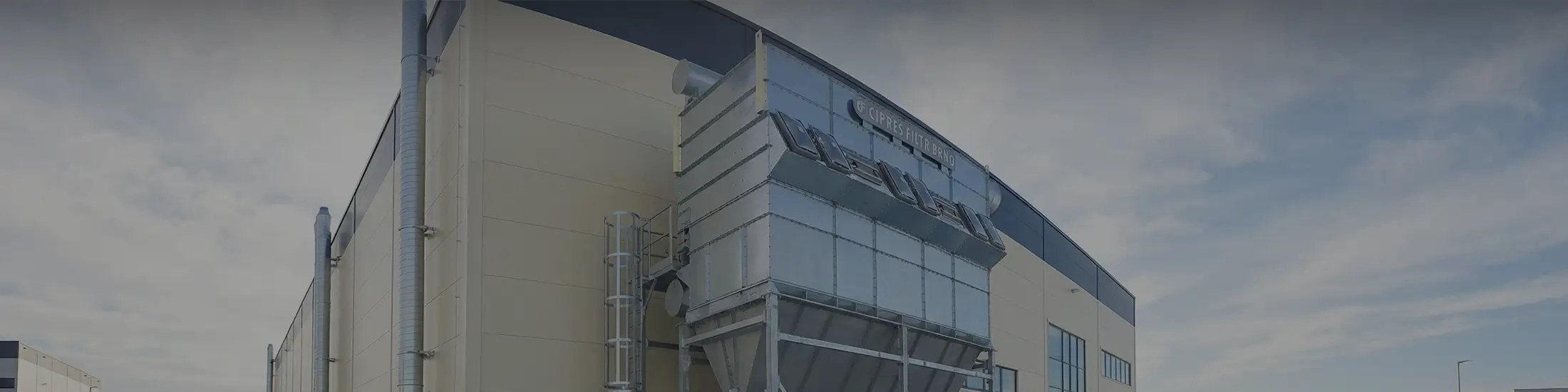
ARCIBISKUPSKÉ LESY A STATKY
References
CIPRES has many years’ experience and countless successful projects in the field of timber-processing plants, joinery workshops and sawmills. This, combined with our fair approach, discipline and ethical standards, was the reason why ARCIBISKUPSKÉ LESY A STATKY OLOMOUC s.r.o. also approached us with their project for a newly built sawmill.
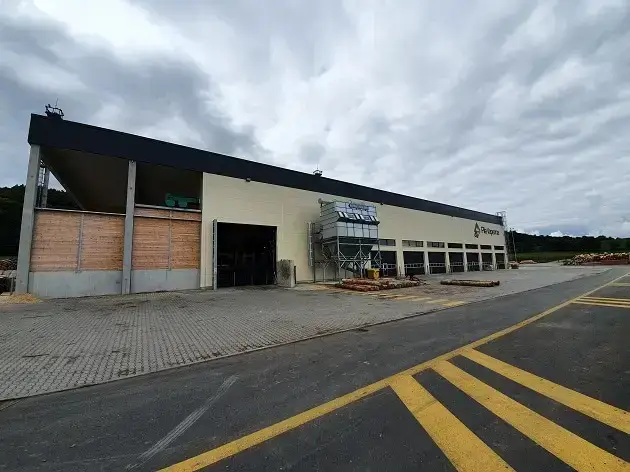
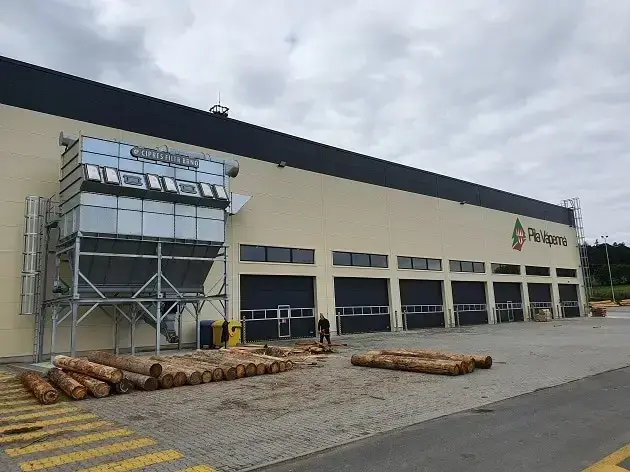
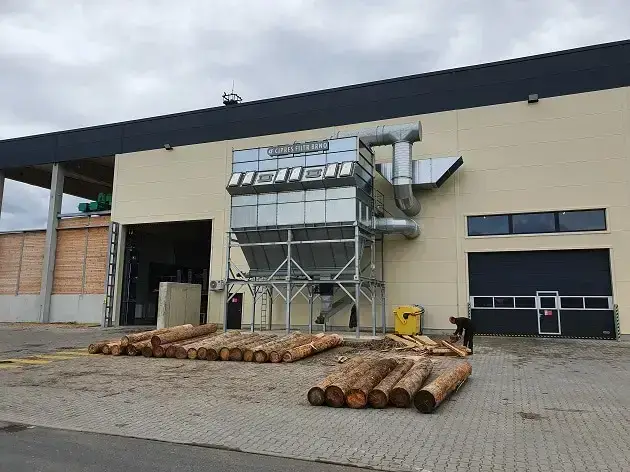
Our extraction system thus became part of the supply of technological units for the construction of a completely new sawmill – a ‘greenfield’ project near the village of Vápenná in the Jeseníky Mountains.
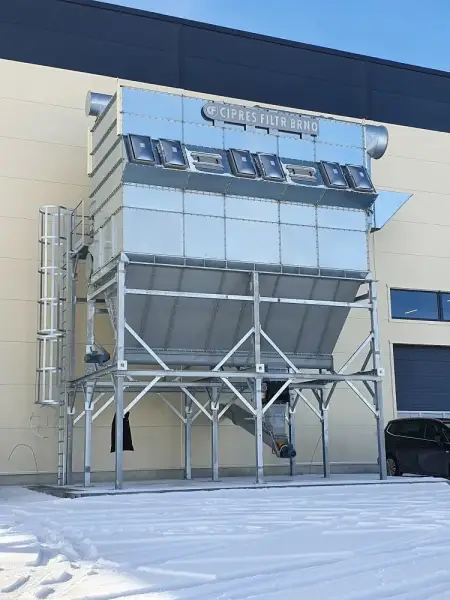
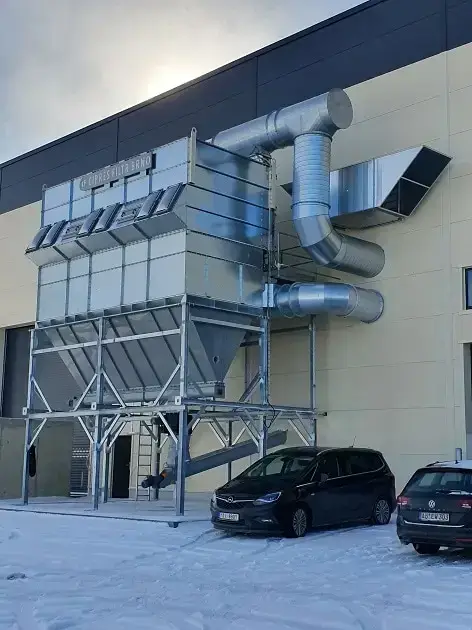
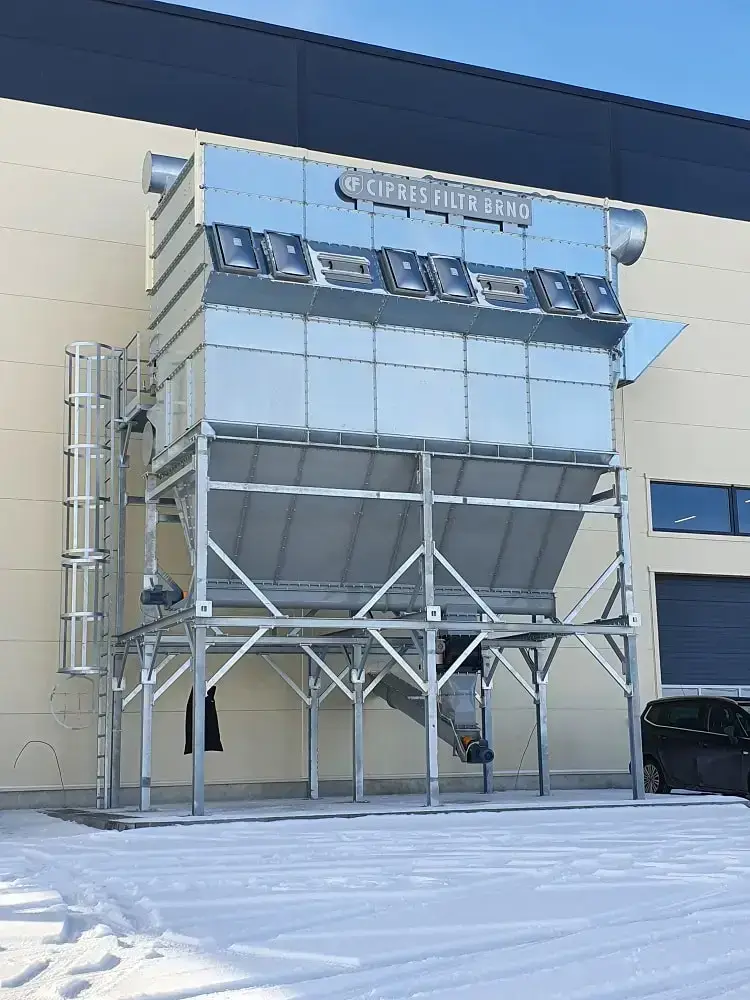
A CARM GH ZLD dust extraction system with an extraction capacity of Q = 40,000 m³/h was designed for the log and cross-cut saws and the brushing machine. This type of filtration system utilises automatic regeneration of the filter media using pulses of compressed air, and separation chambers are fitted at its inlet to pre-separate large particles from the extracted material.
The dust is distributed back into the hall via a pair of screw conveyors onto an outlet conveyor belt. The exhaust from the filtration unit can operate in two modes – with ‘recuperation’, i.e. returning the filtered clean air back into the hall, or, during the summer months, discharging it into the outdoor environment.
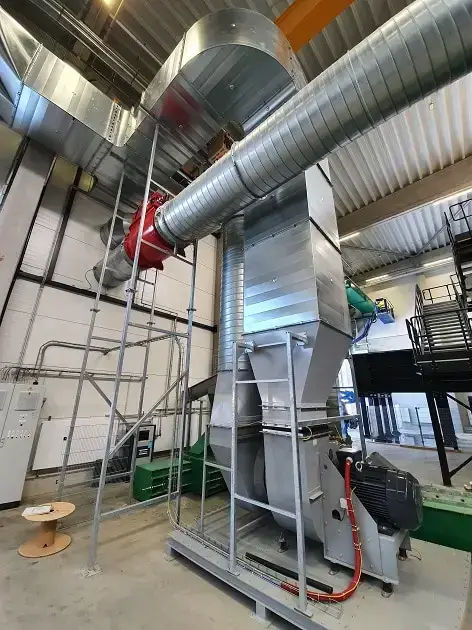
With this technology, the extraction fan is installed inside the production hall (sawmill) at the customer’s request, which results in a reduction in noise pollution for the surrounding area.
The control system is equipped with a frequency converter, which delivers significant savings in operating costs (kW) and also allows the system to operate with a power reserve at a lower noise level.
Given the nature of the material being extracted – dust with explosive potential – the entire system is designed in accordance with the ATEX standard (for the extraction of explosive dusts). The explosion-proof diaphragms are positioned on the filtration unit in such a way that it is not necessary to define a safety zone around the filter → they are directed upwards. The B-flap safety check valve, anti-static filter media, additional safety electrical connections and electronic filter status monitoring are standard features of this type of system (in accordance with ATEX).
In the photographs provided, you can also see walkways and service platforms for accessing key areas of the system, inspection hatches, as well as several preparatory elements for potential future additions (the support frame for the silencer chamber beneath the fan, pre-installed components for future handling of the equipment, a movable mechanism for removing dust, free inlets and more).
Ing. Tomáš Zlámal

© 2026 CIPRES FILTR BRNO s. r. o.
All rights reserved