WOOD-PROCESSING PLANTS
Applications
Before a wooden product takes on its final shape, it must undergo numerous technological processes during which raw timber is transformed into a specific product characterised by its particular shapes and properties.
Part of these individual processes involves the generation of sawdust (often exceeding 50 per cent of the volume of the raw timber) and dust particles, which accumulate, spread and settle in the area surrounding the production machinery.
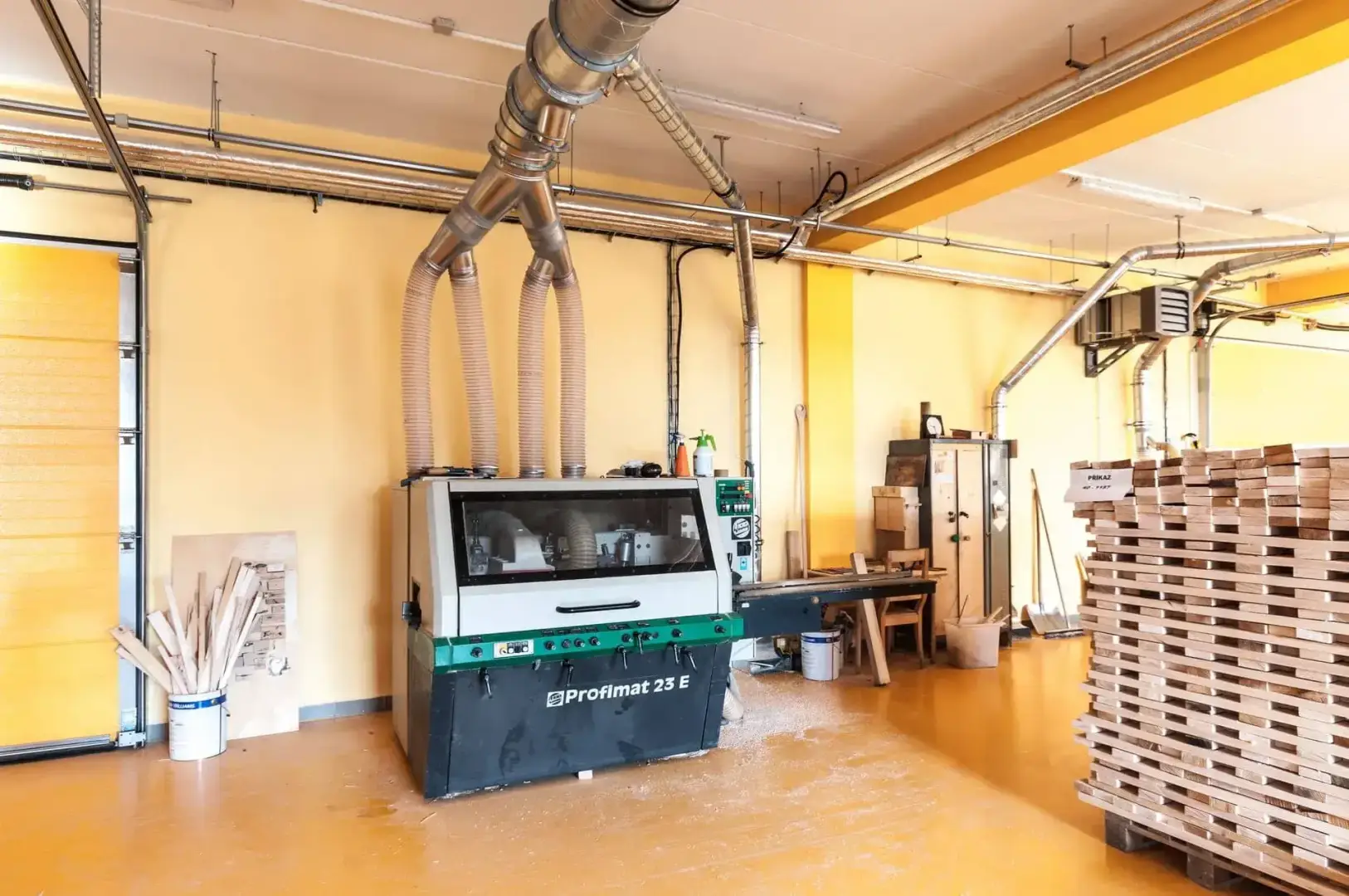
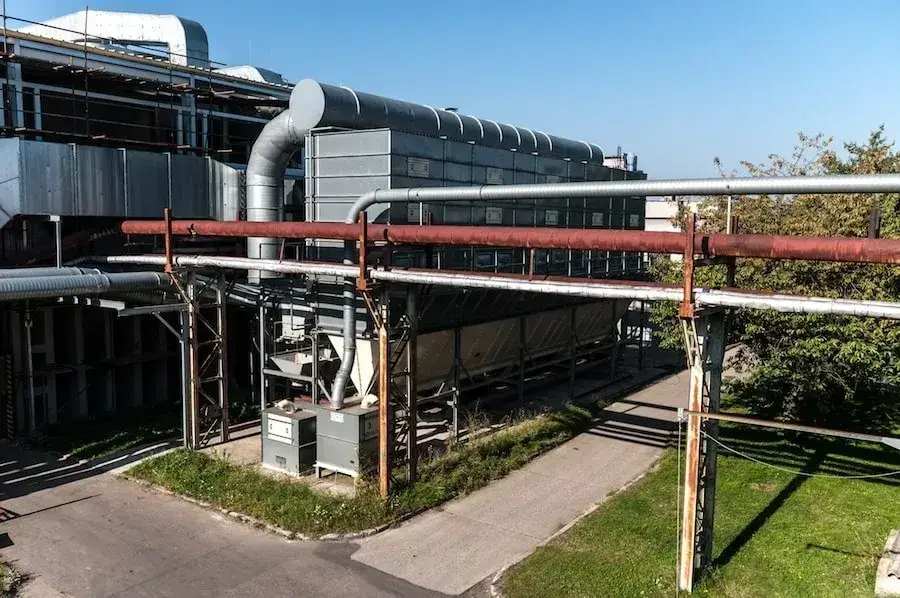
Higher concentrations of sawdust, and in particular the accumulation of fine wood dust, can create an environment with a risk of explosion, which is undesirable. Extraction and filtration equipment – in our case, the recommended CARM GH-ZLD or CUMA D-ST – is designed to extract sawdust and dust as close as possible to the point of generation, thereby preventing their accumulation, spread and settling in the surrounding area. Extracting sawdust and concentrating it within the extraction and filtration system facilitates its further processing.
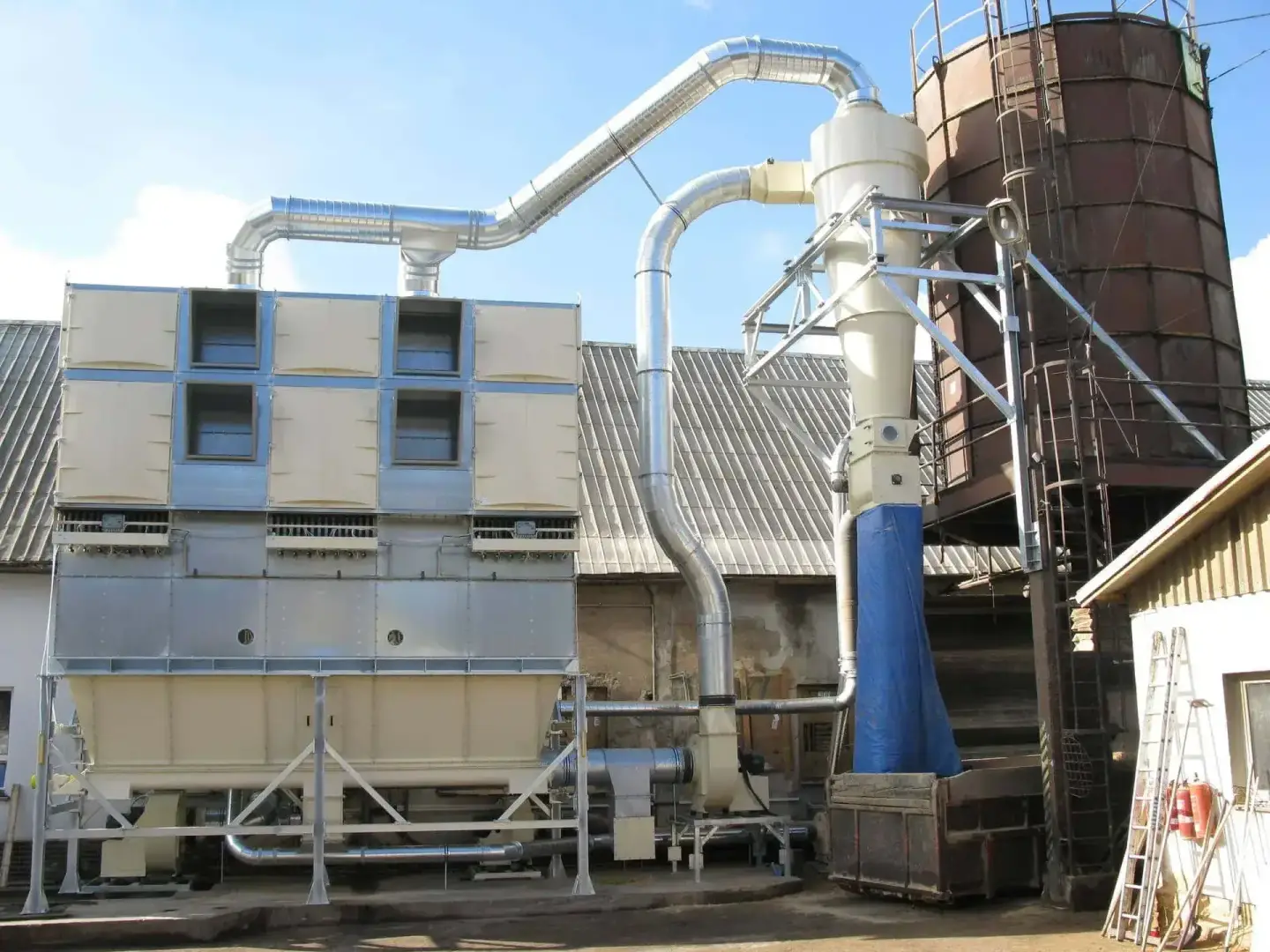
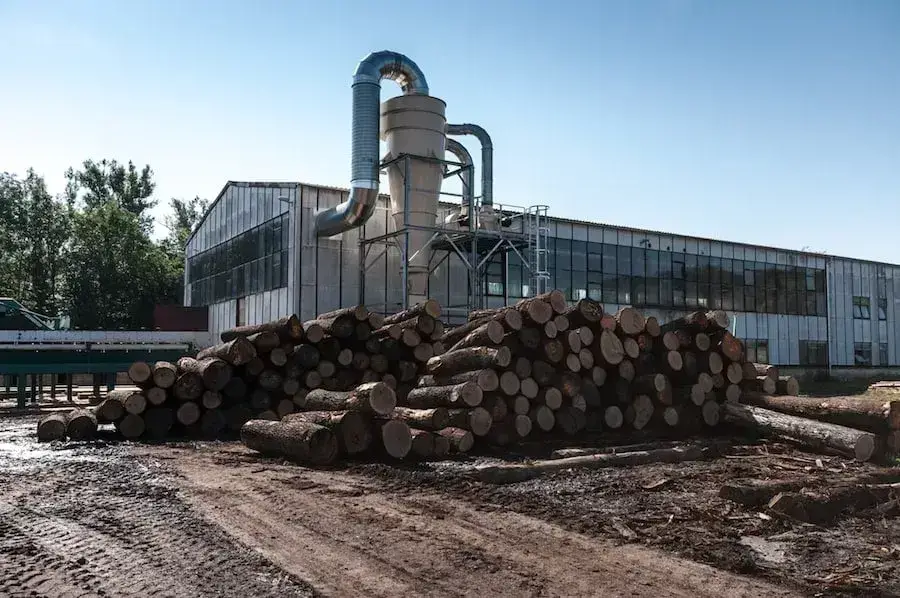
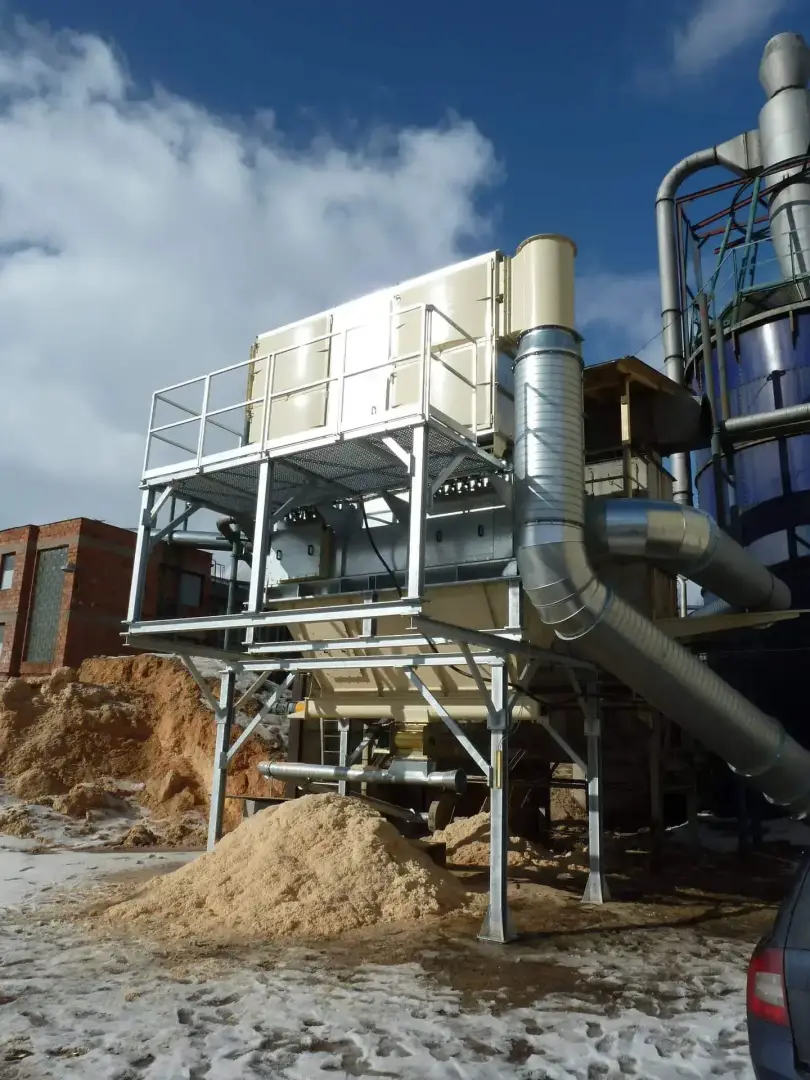
This is a specialised operation where the extraction system removes large quantities of coarse and wet sawdust. The use of filtration equipment is problematic in this case, as during the winter months the filter media, saturated with water from the separated sawdust, can freeze, thereby significantly impairing the function of the filtration system. Even today, the use of cyclone separators remains the most technically suitable solution for this application. The exhaust from the cyclone separator is channelled back into the sawmill’s interior, where it is redistributed into the work area via filter sleeves. This system is highly reliable in practice thanks to the powerful extraction of wood waste.
A briquetting press can be incorporated into the system, which compresses the waste sawdust into briquettes suitable for heating. The sawdust and dust extraction system can be fitted with a function to regulate the extraction capacity according to the machines currently in use, thereby achieving energy savings.
Regulation is carried out by means of a frequency converter in conjunction with automatic dampers.
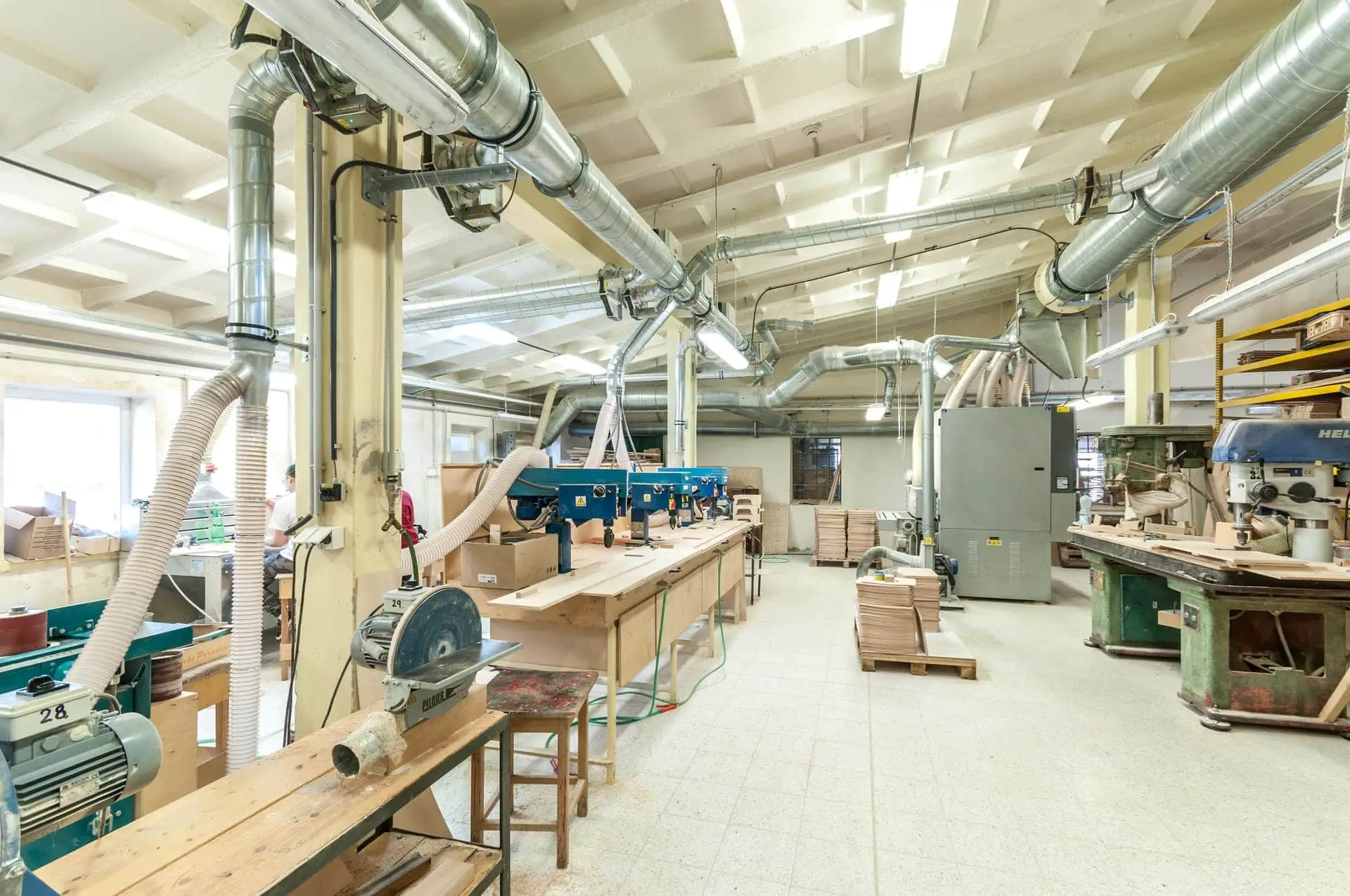
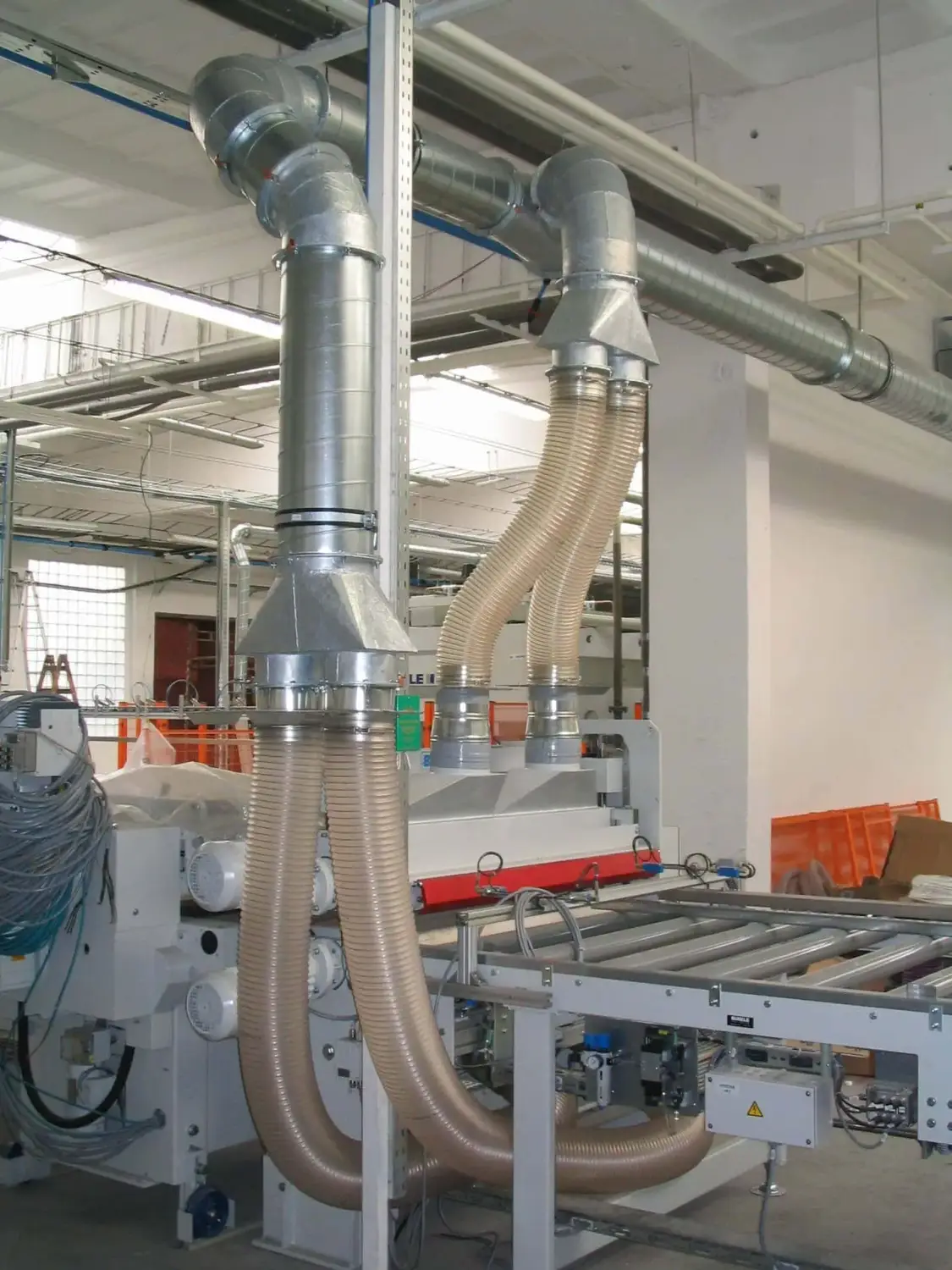
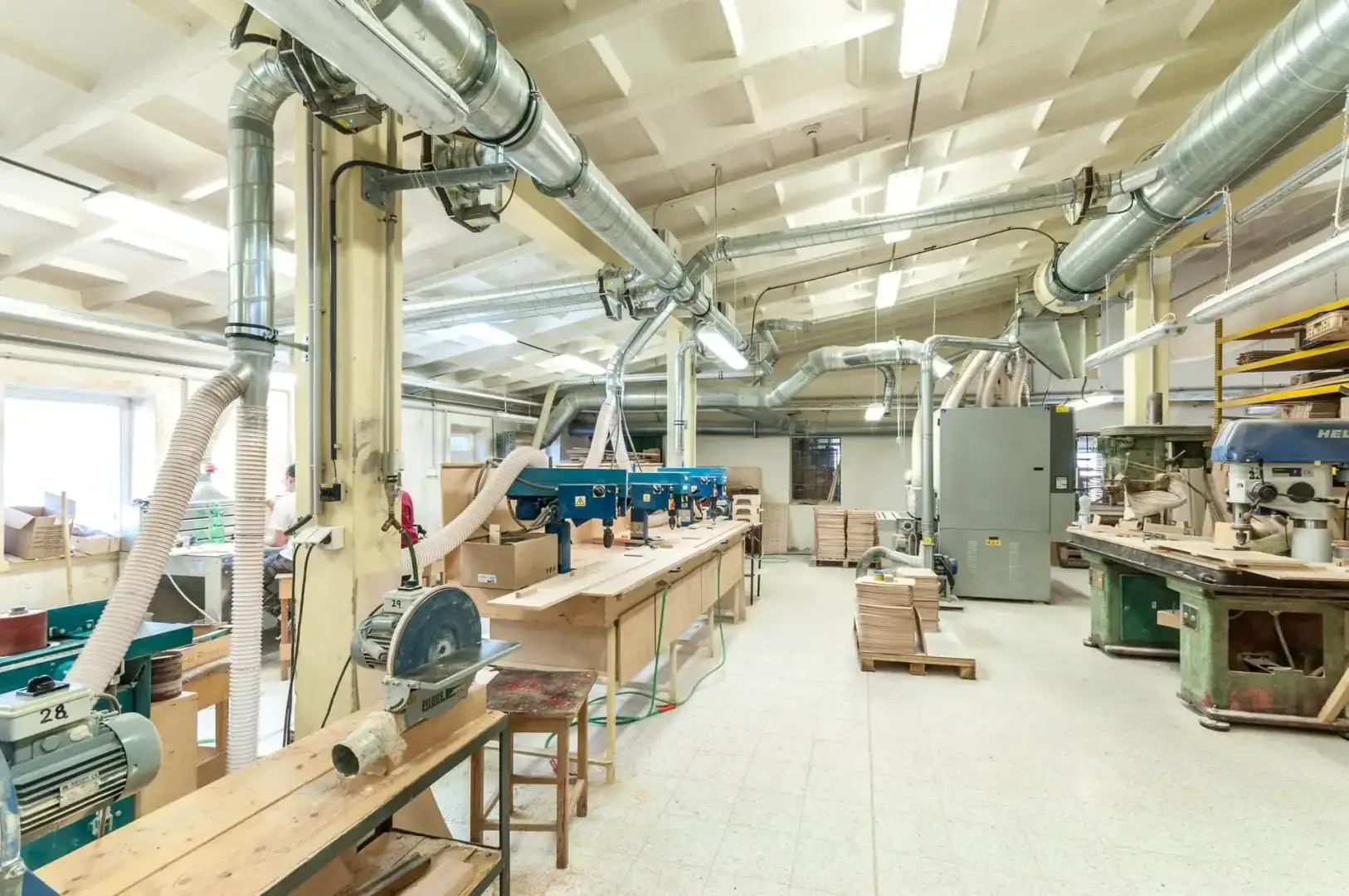
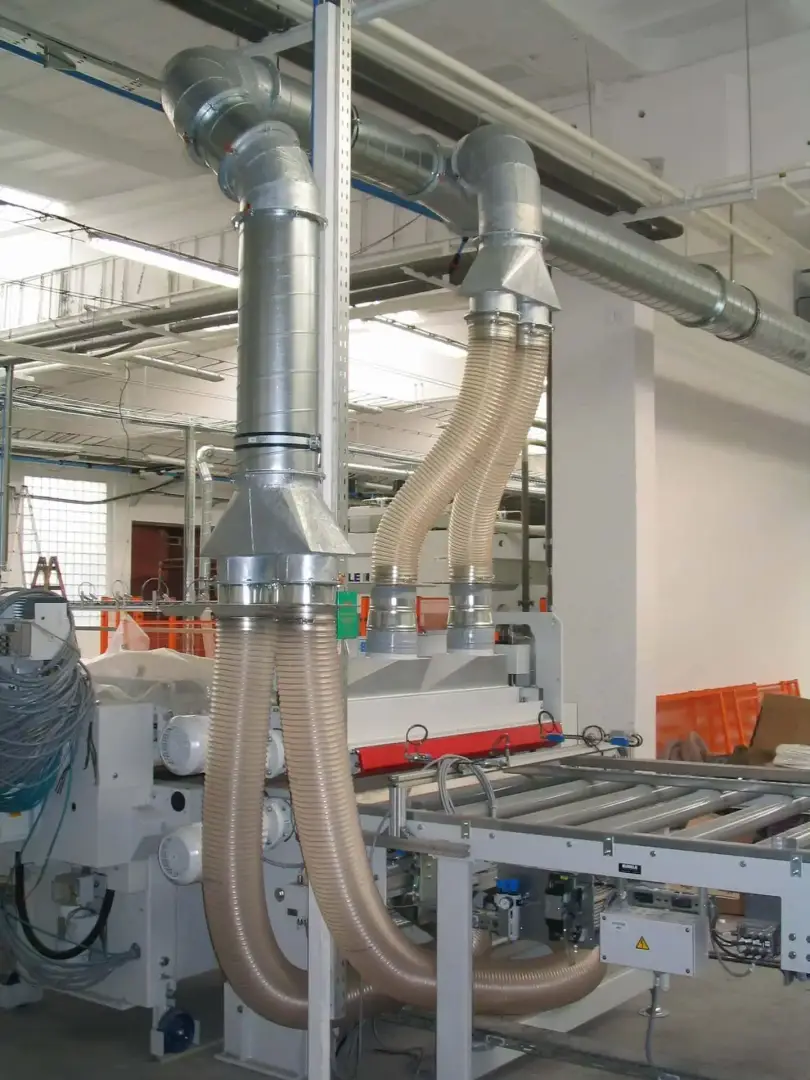
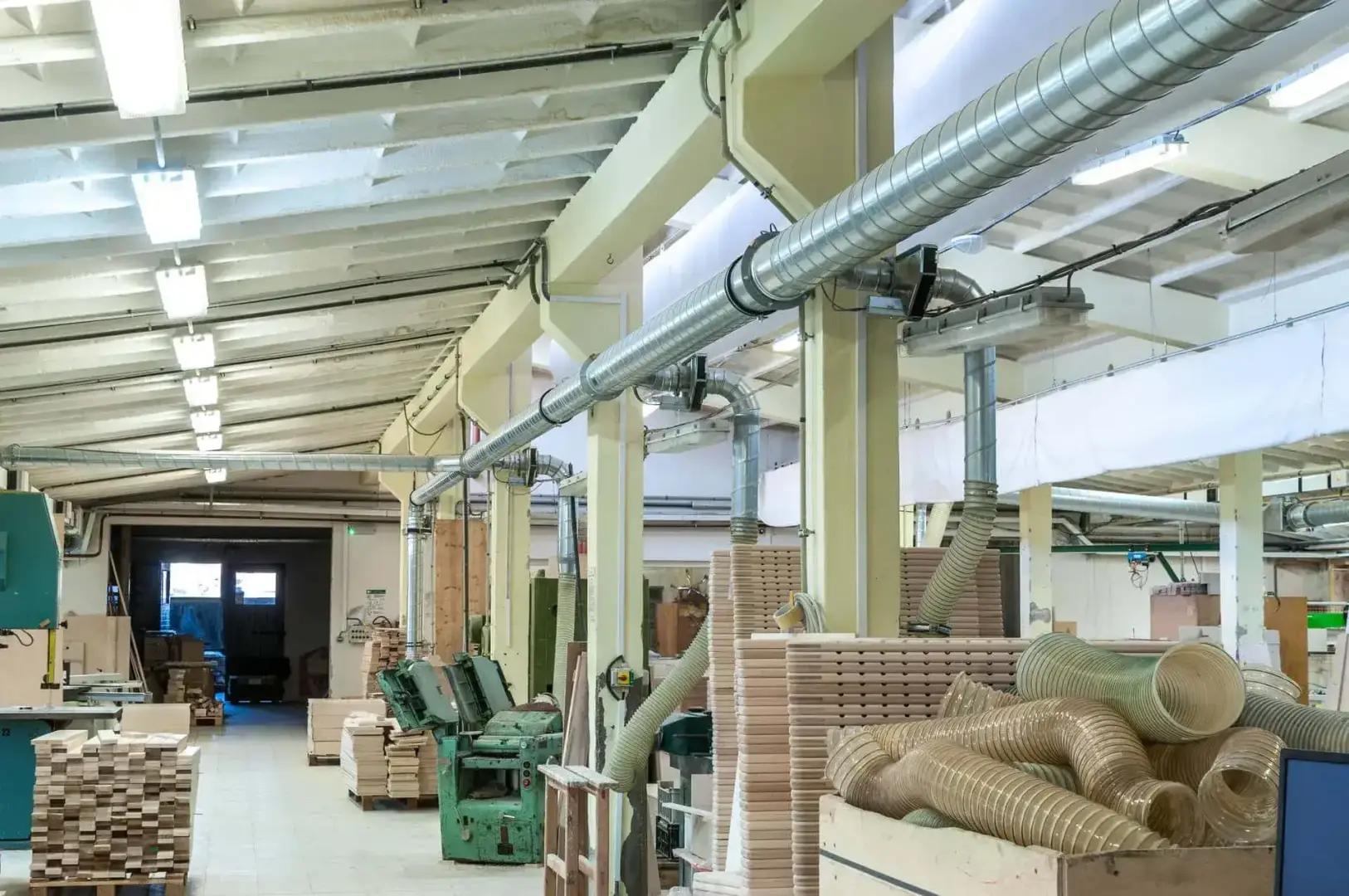
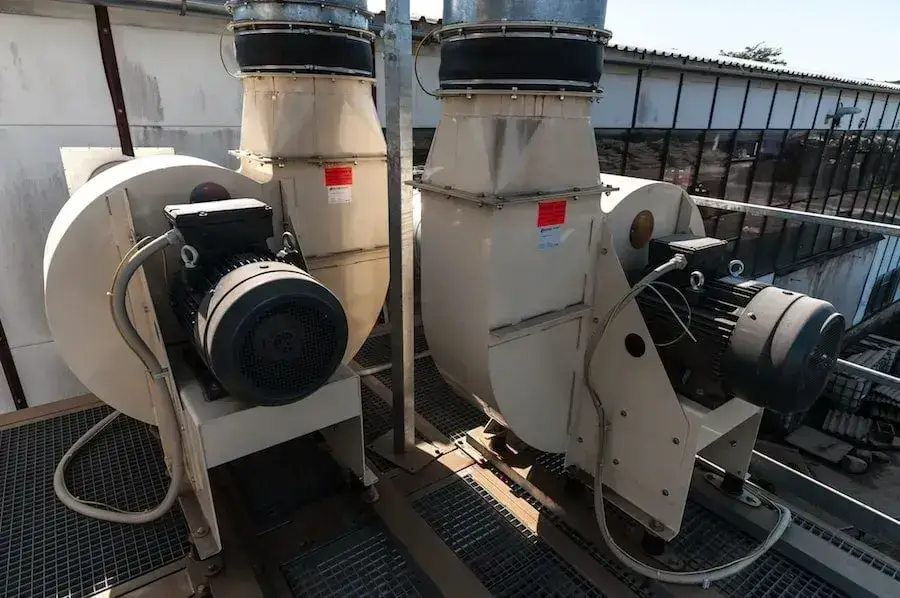
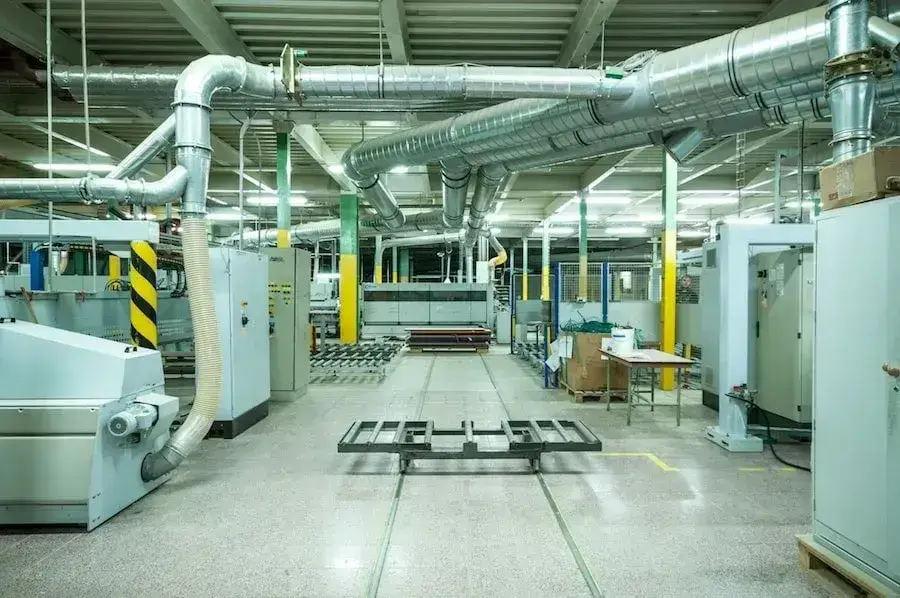
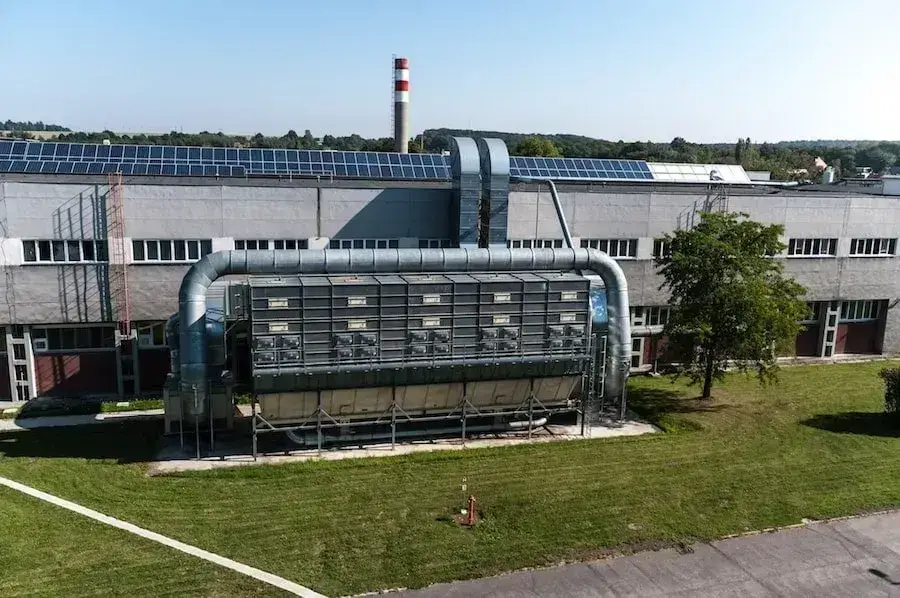
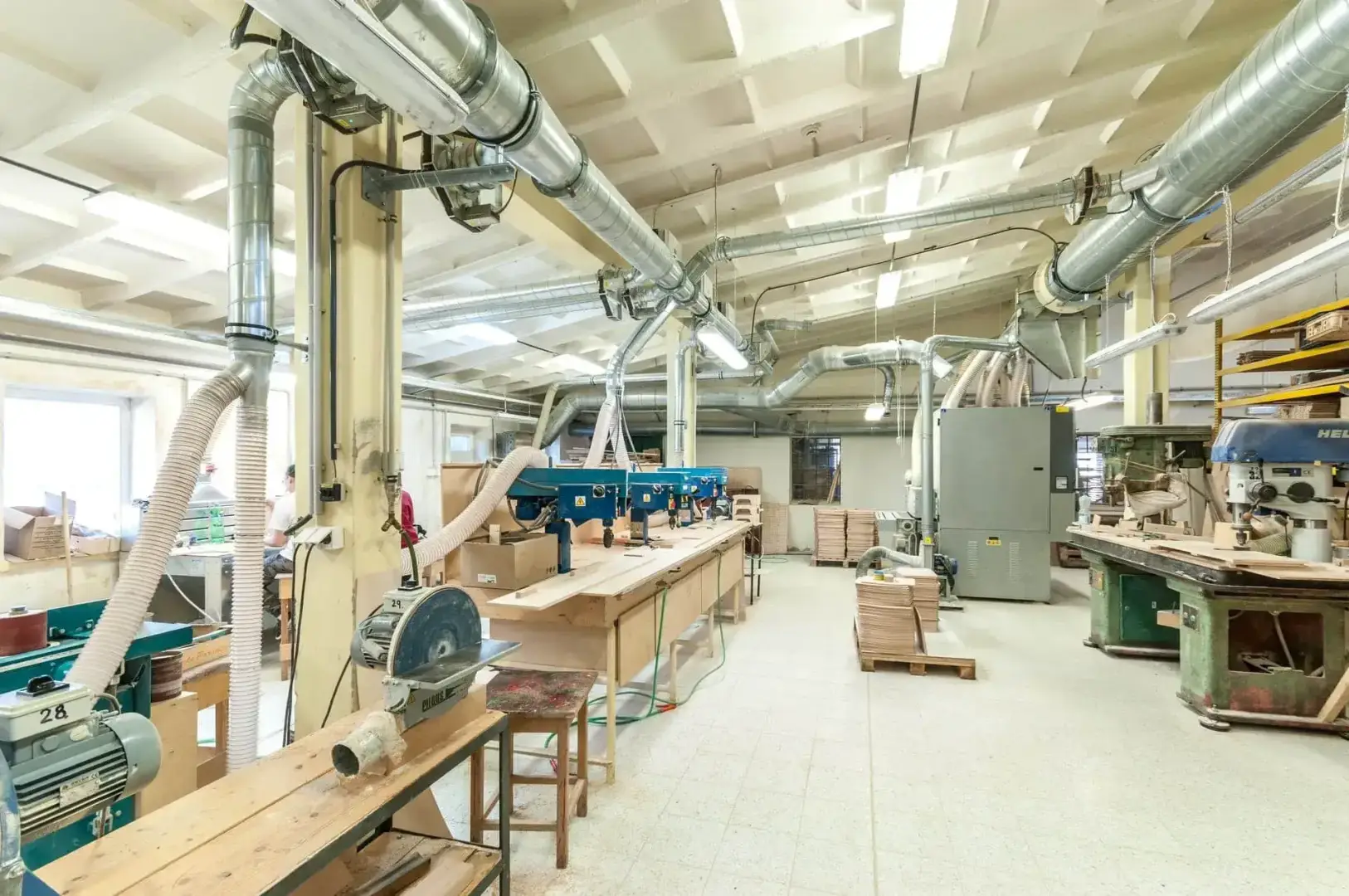
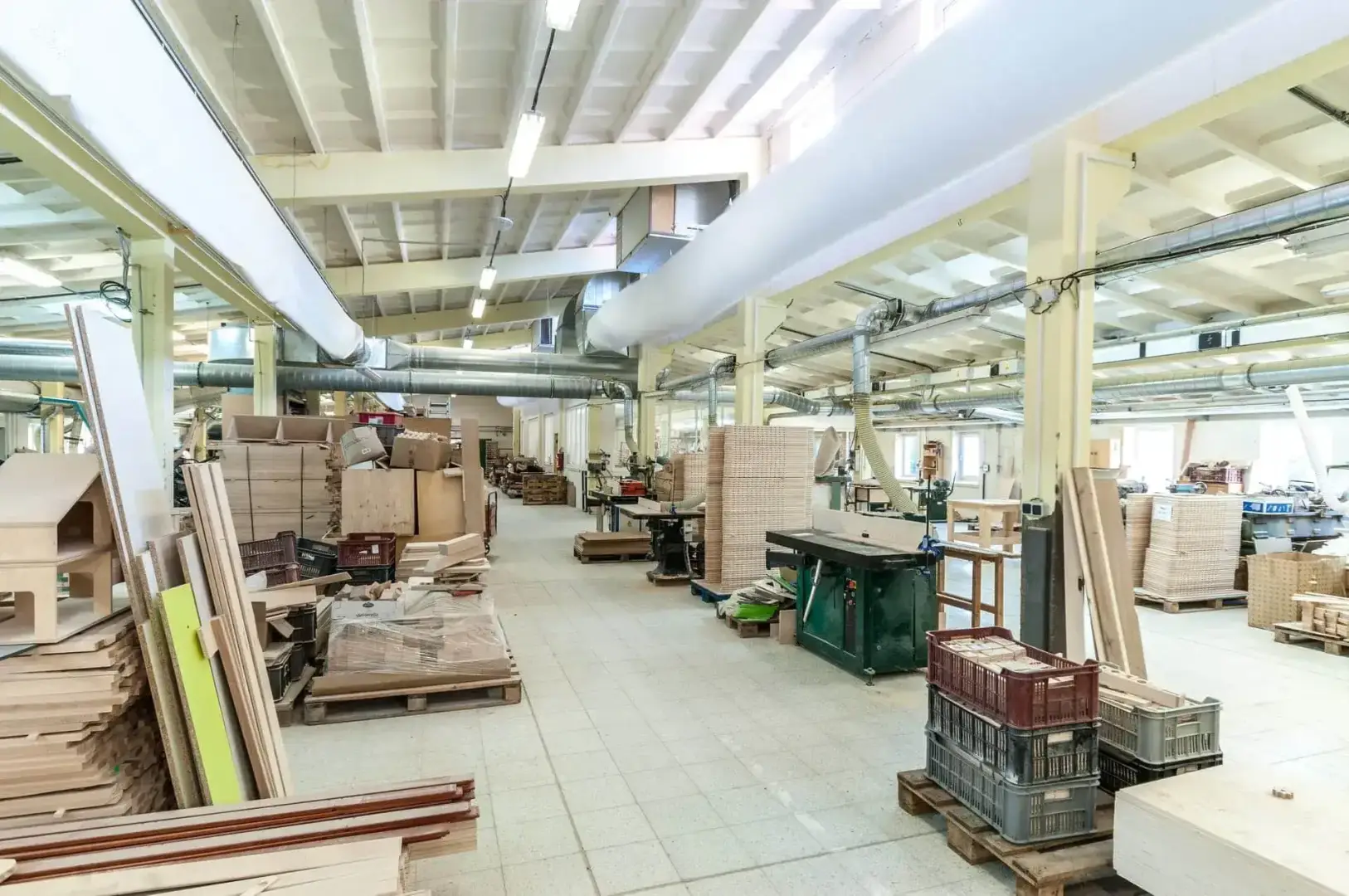
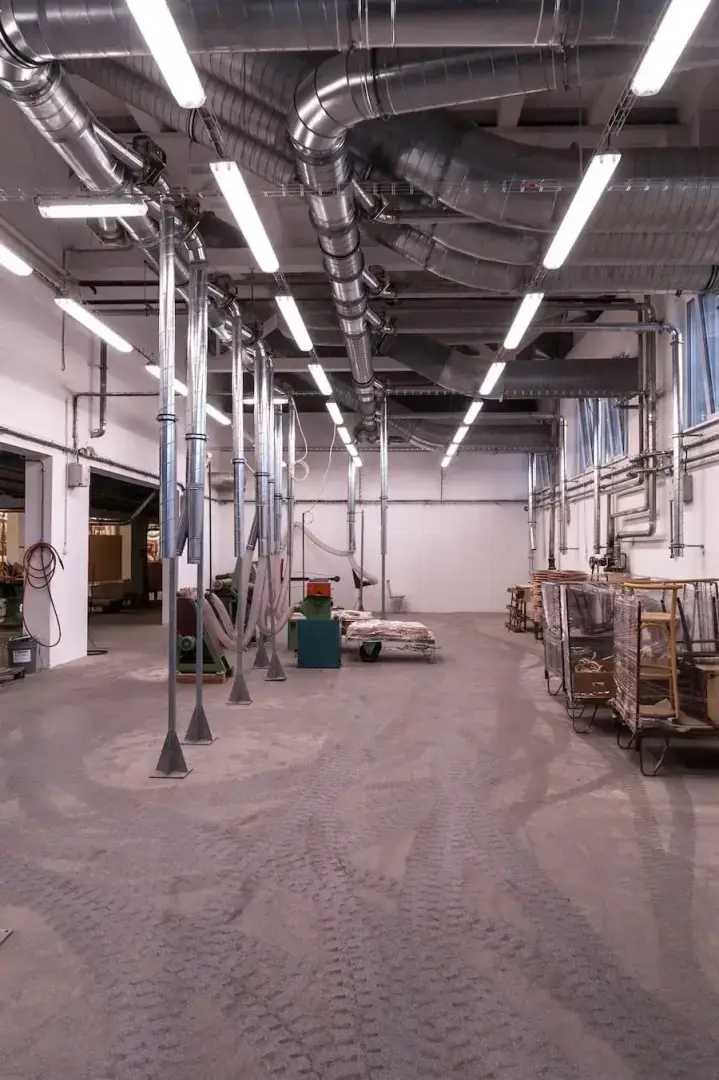
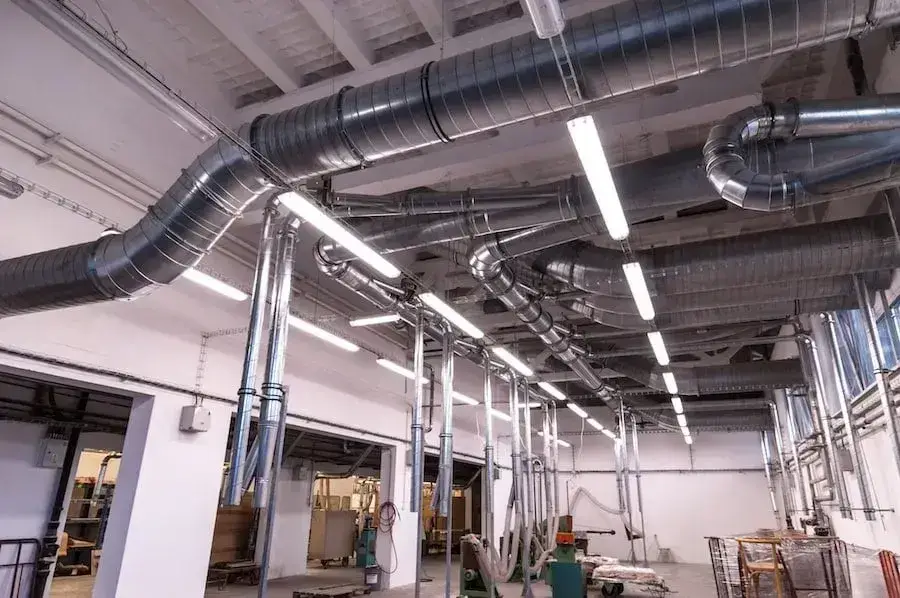
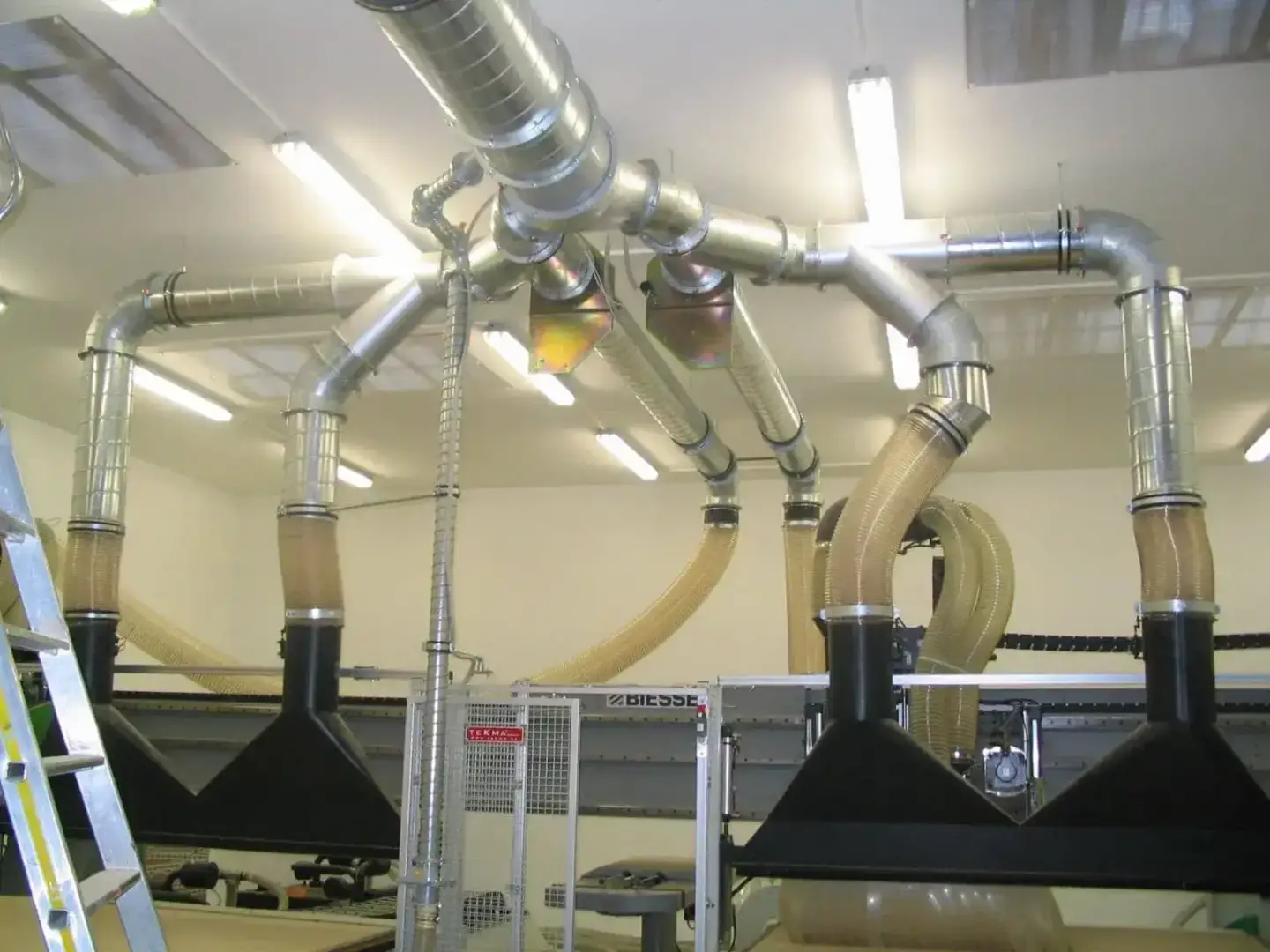
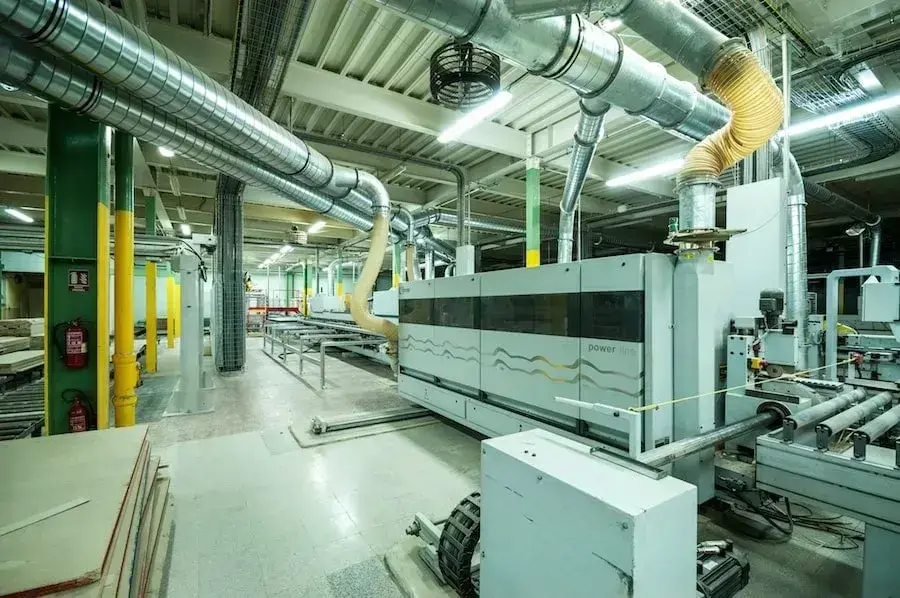
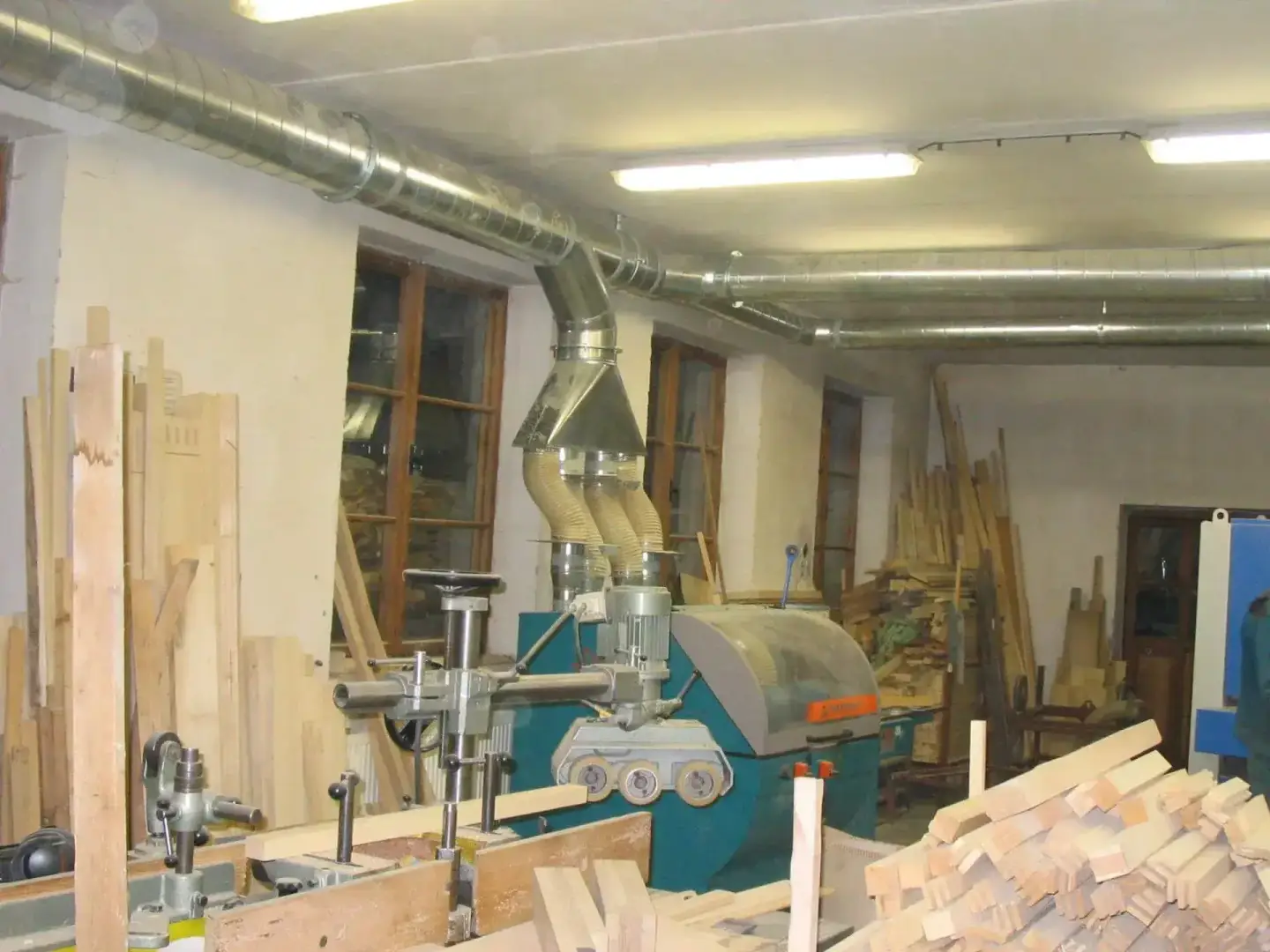
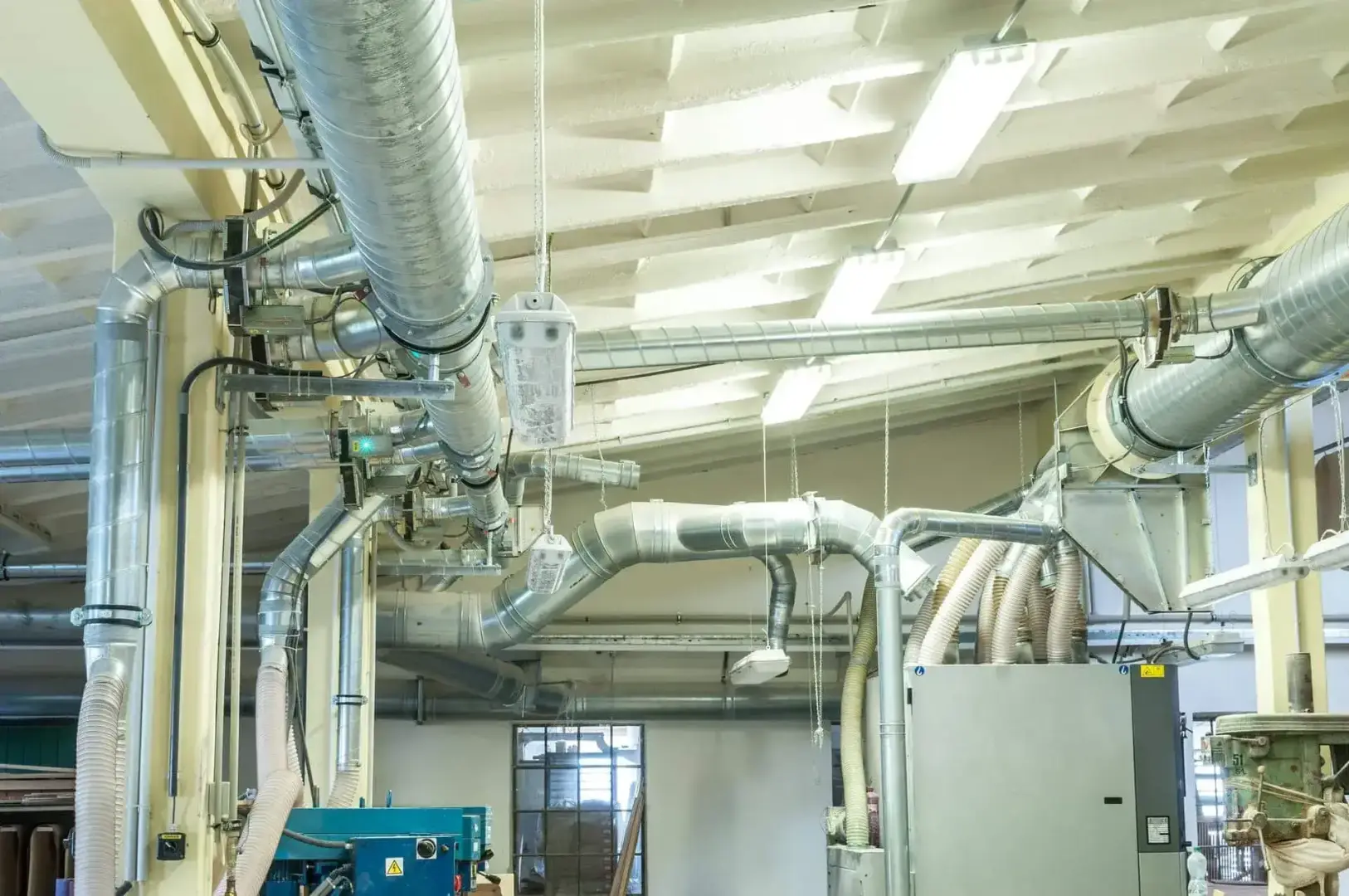
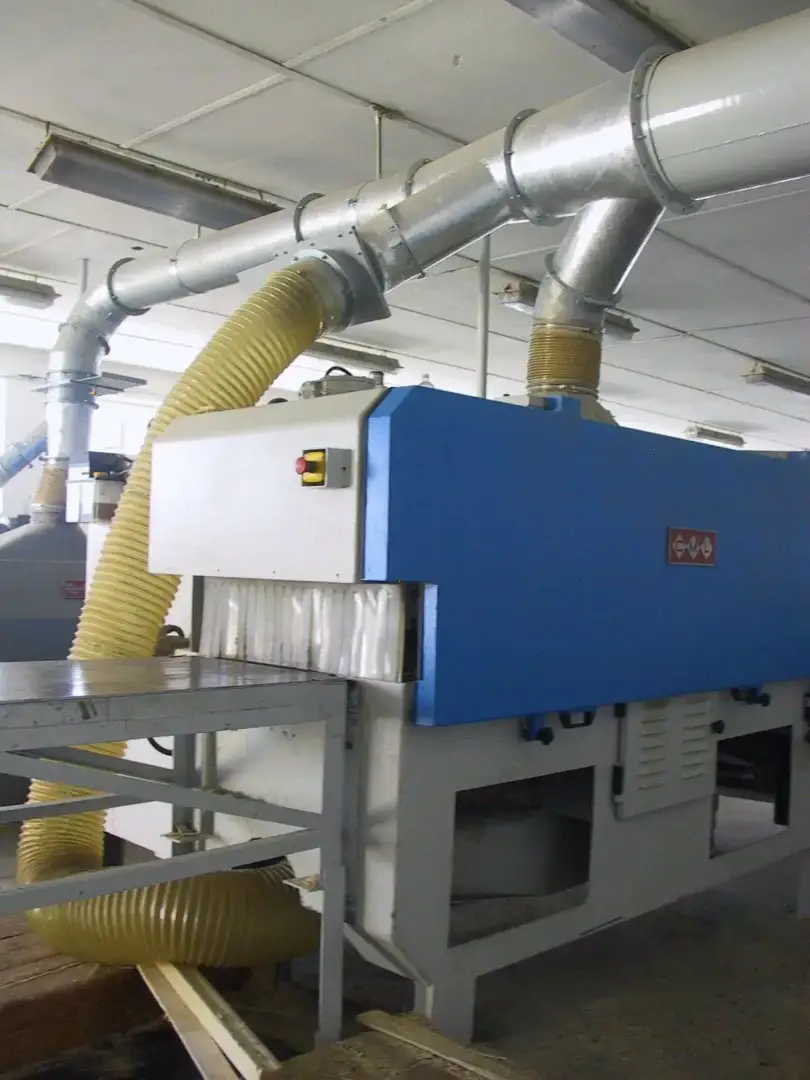
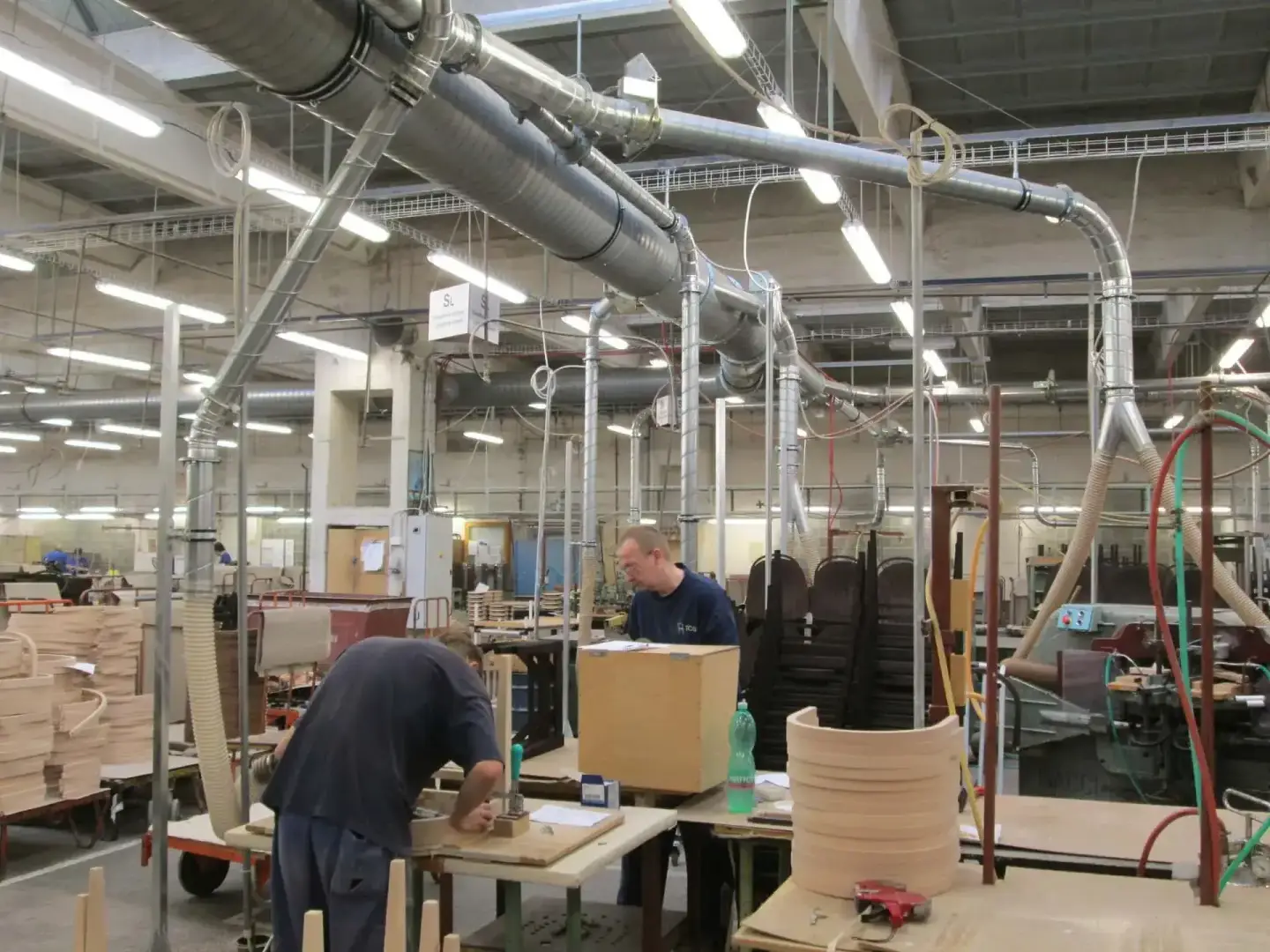
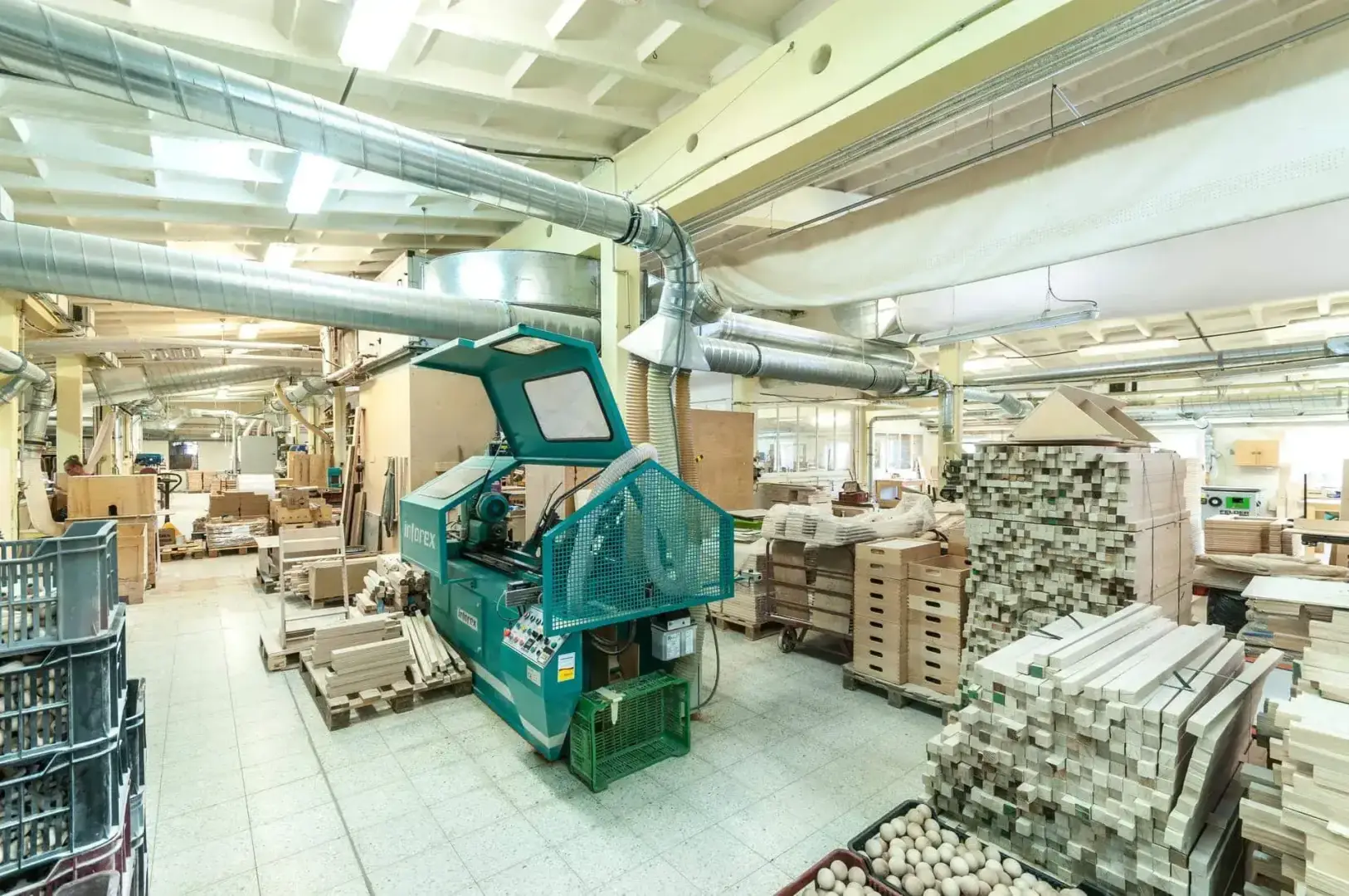
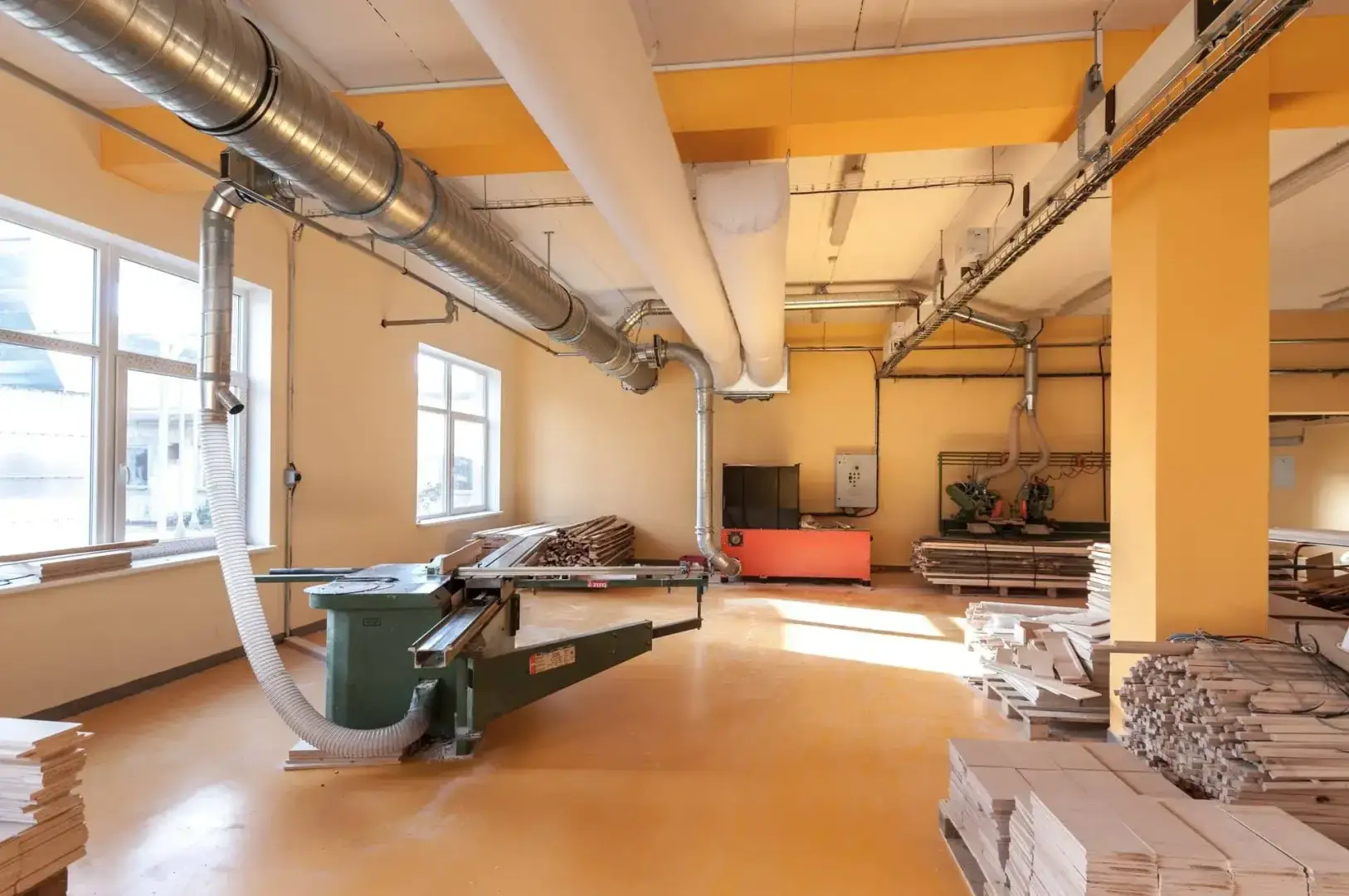
Centralised extraction is used in workshops where work is carried out on several woodworking machines simultaneously. Depending on the extraction capacity required for individual machines, groups of machines are then formed, which are connected via a central extraction duct to the filtration system. Individual woodworking machines have different requirements regarding the volume of air extracted, the extraction velocity at the connection point and the required negative pressure. The dimensions of the duct branches, the filtration system (recommended filters: CARM GH-ZLD and CUMA D-ST) and the fans are always tailored to the specific woodworking operation and the volume of wood waste being extracted.
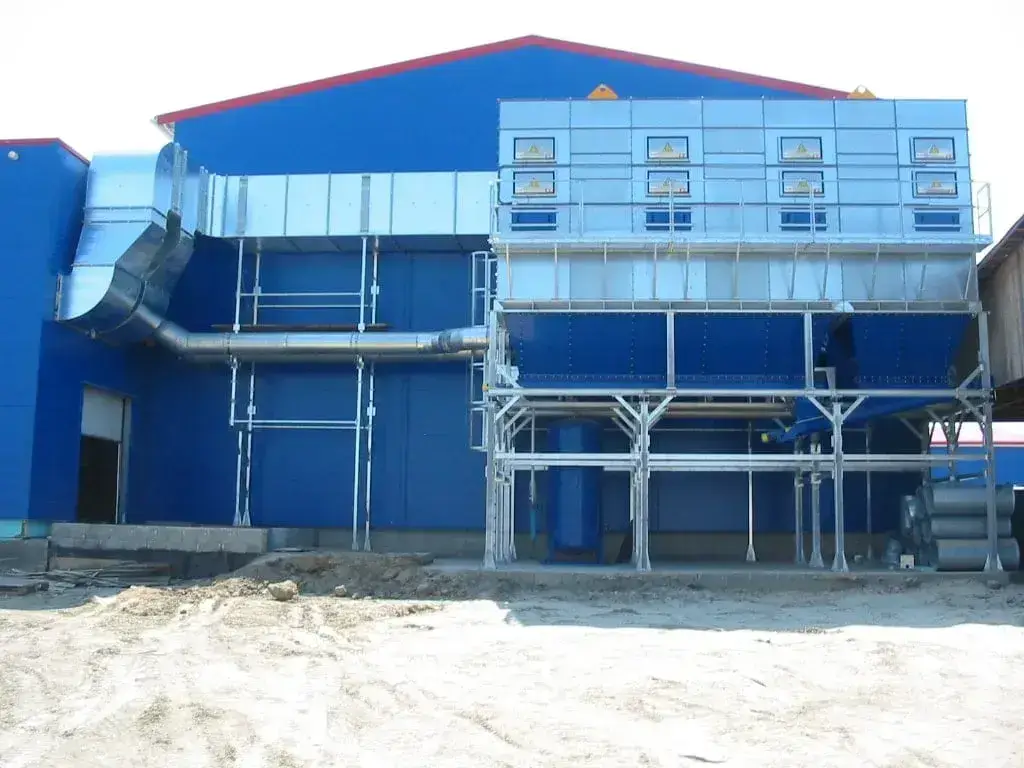
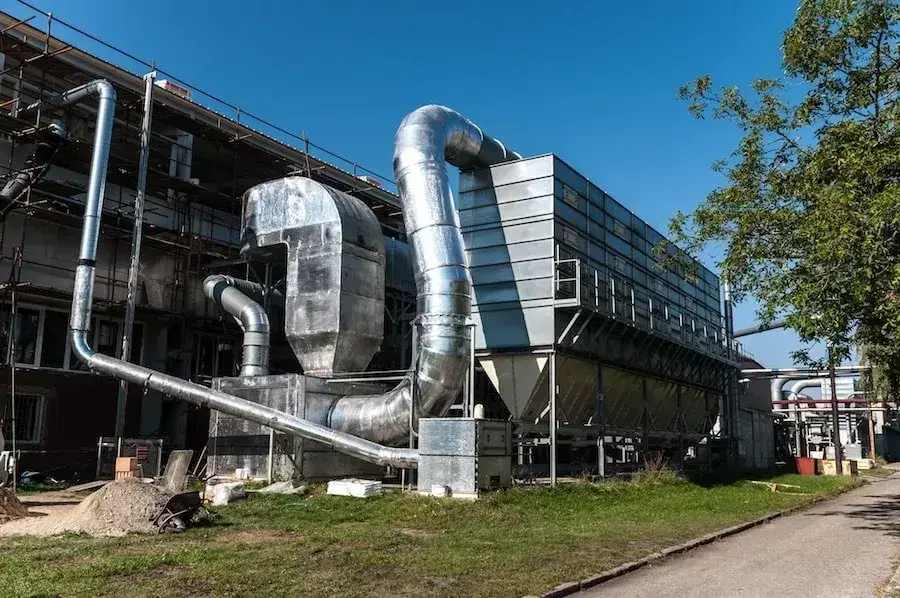
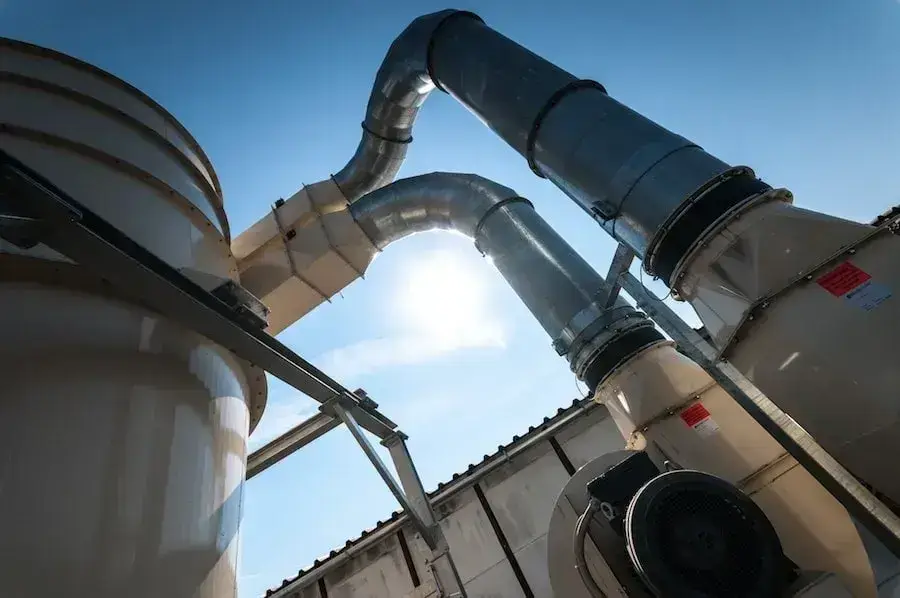
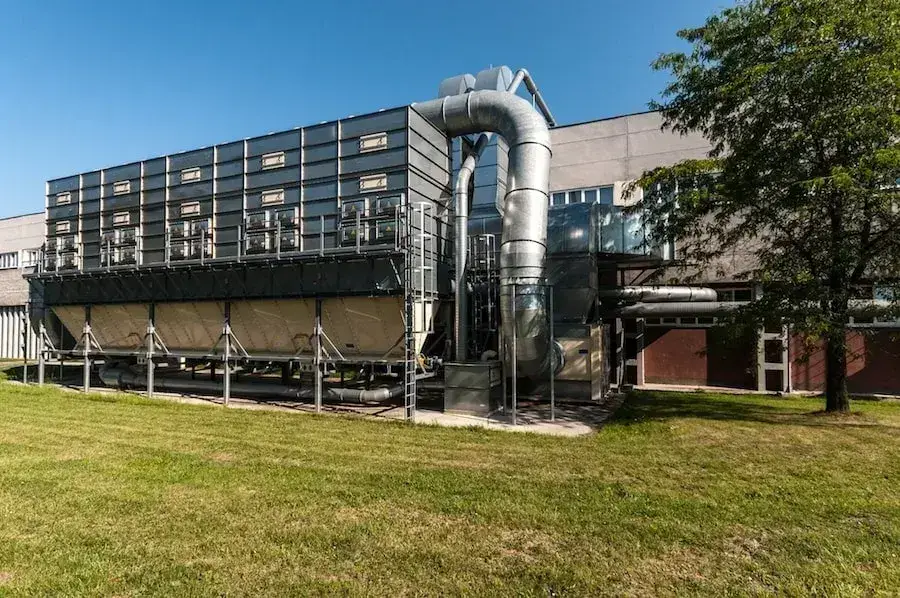
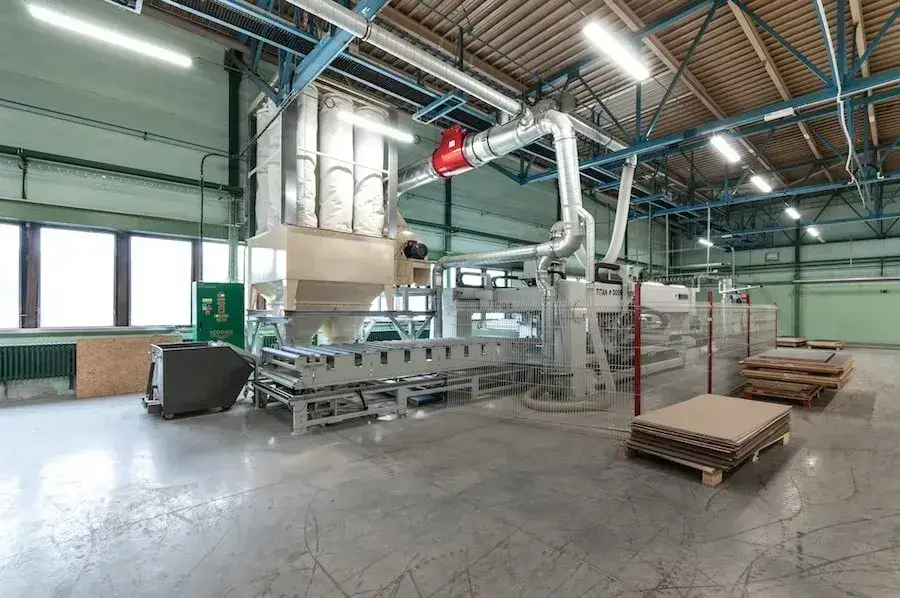
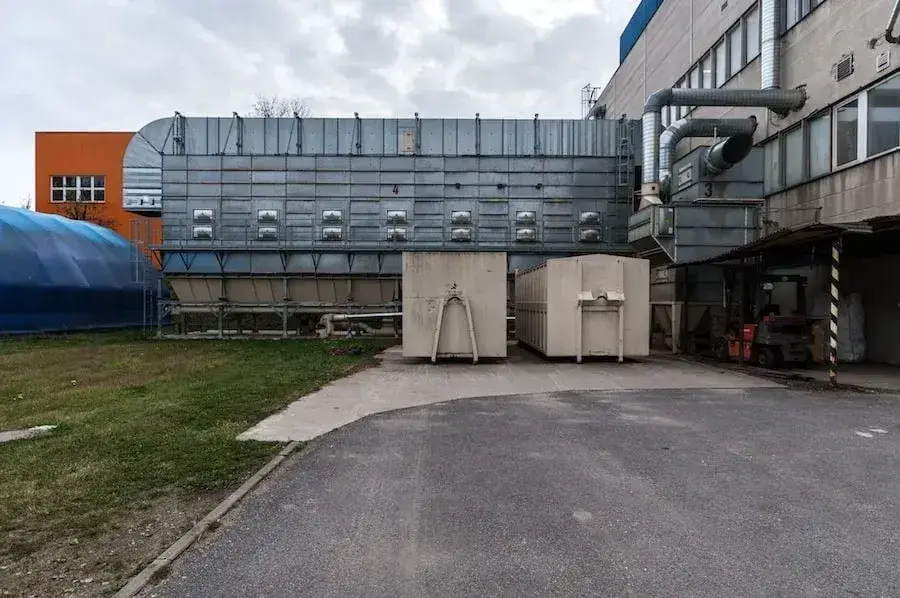
For the most demanding applications, we use CARM GH-ZLD filter units, equipped with automatic regeneration of the filter media using counter-flow compressed air. For smaller operations, we supply CUMA D-ST filter units with filter media regeneration via a vibrating shaker. The filtration system separates sawdust and dust, and the clean, filtered air is discharged to the outside in summer and recirculated back into the hall in winter, thereby achieving significant savings on heating costs during the winter months. Switching between summer and winter operation is achieved using shut-off dampers with the option of electronic control.
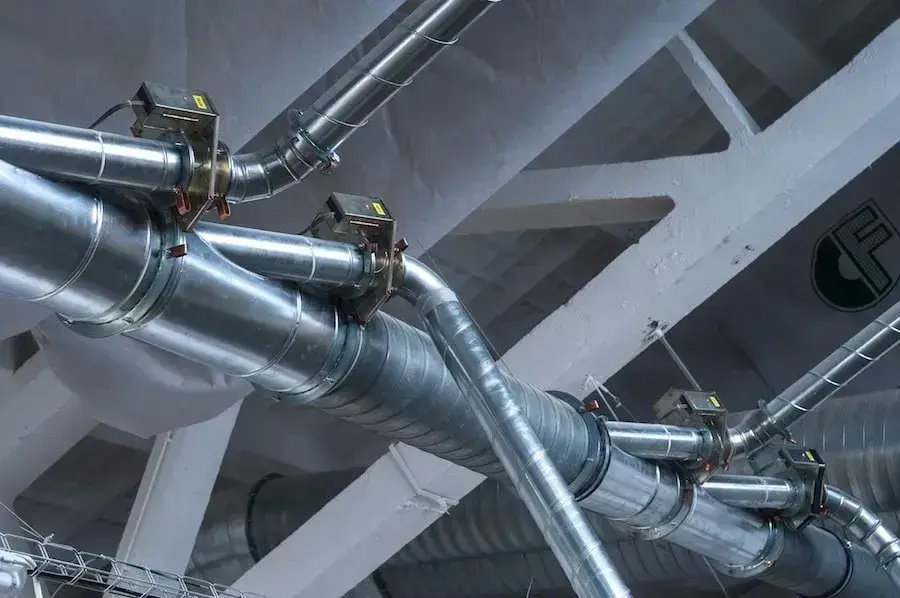
We are increasingly installing extraction systems equipped with smart control. The filtration unit, in conjunction with a frequency converter, automatic dampers, a control system and sensors, regulates the extraction capacity in line with the operation of the production technology. The filtration system starts and stops automatically. By installing smart control, we help our clients save on electricity costs.
From either the CARM GH-ZLD or CUMA D-ST filtration unit, sawdust and wood waste are conveyed via a hopper and screw conveyor for further processing. The most common methods of sawdust processing are briquetting, combustion in the client’s own boiler, and transport to silos or containers. Our applications include major projects utilising all the waste processing methods described. The choice of the most suitable method for processing sawdust is always discussed with the user, and the technology is tailor-made for each timber processing plant.
We design and supply our systems so as not to burden clients with high operating costs for the filtration system. They utilise smooth filter sleeves made from microporous filter fabric. The filter sleeves contain no fillers, do not tear and are highly mechanically resistant. For applications in welding shops, we specify a service life of at least 20,000 operating hours for the filter media.

© 2026 CIPRES FILTR BRNO s. r. o.
All rights reserved