EXTRACTION SYSTEM FOR SOLID-FUEL BOILERS
Applications
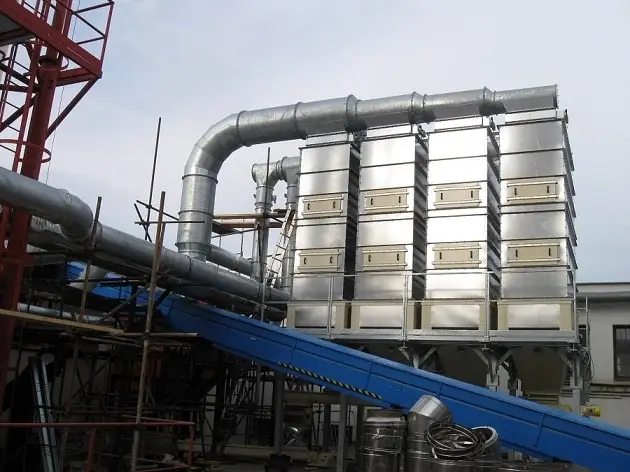
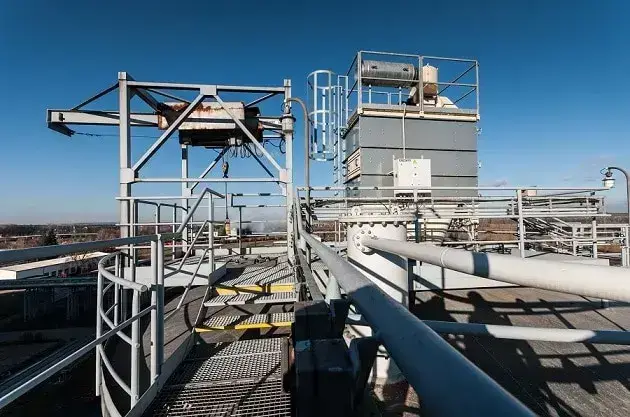
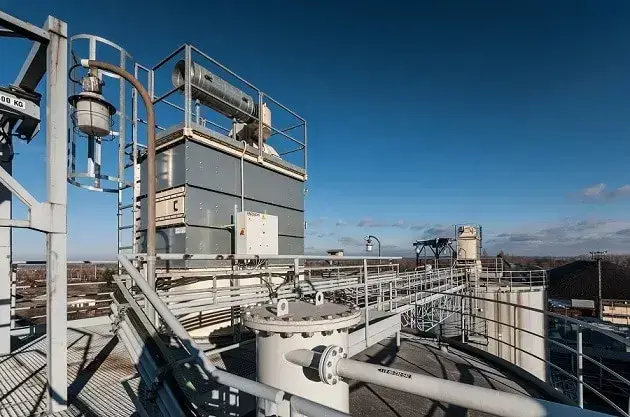
The combustion of coal or biomass is a method of generating thermal energy. Coal, wood chips, straw, hemp, maize cobs and other predominantly waste natural materials can be used as fuel. Combustion produces large quantities of light, fly ash, which is discharged into the outdoor environment via the flue when the flue gases are extracted. The CARM GH filtration system is designed to separate light, airborne ash from the flue gases, thereby preventing its release into the environment.
The flue gases extracted during biomass combustion are characterised primarily by their content of vapour, light fly ash and burning particles. Burning fuel particles carried by the flue gases must be removed using a mechanical pre-separator, which is positioned upstream of the filtration system. When burning biomass, we recommend installing an automatic spark arrestor system between the pre-separator and the filtration system, which will ensure the highest possible protection of the filtration system against fire.
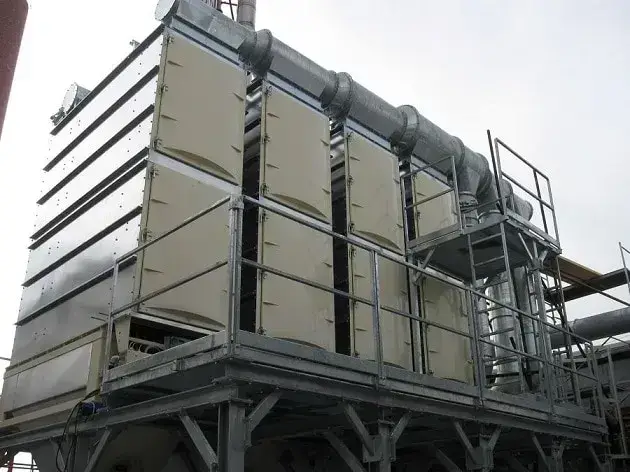
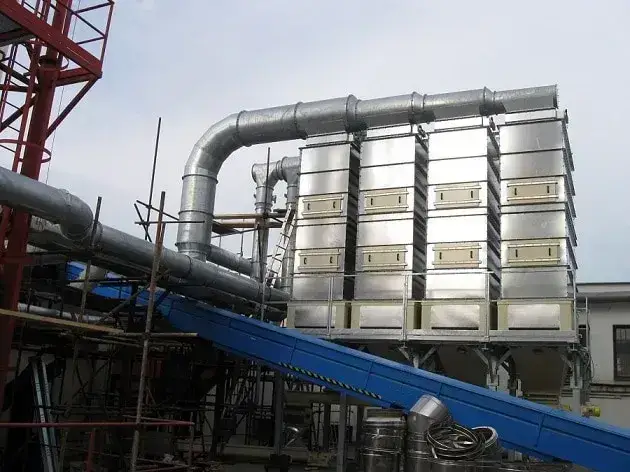
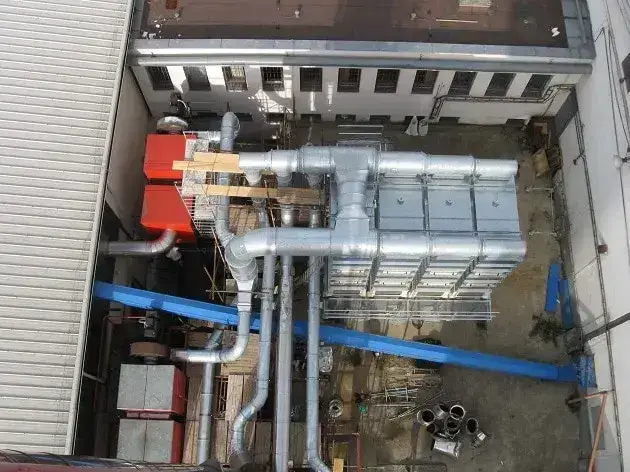
The flue gas filtration system is divided into several filtration chambers, which cycle during operation, enabling continuous operation without the need for shutdowns.
The flue gas filtration system for biomass combustion can also be applied to multiple boilers simultaneously. In this case, an auxiliary fan is fitted downstream of the filtration unit; this is controlled by a frequency converter to maintain a constant negative pressure upstream of the filter. The auxiliary fan responds to the operating conditions of the individual boilers.
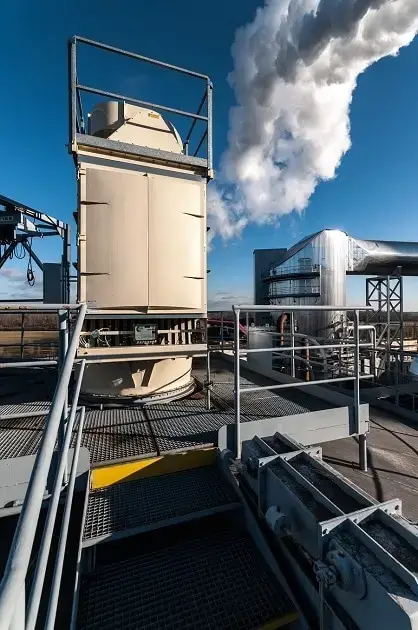
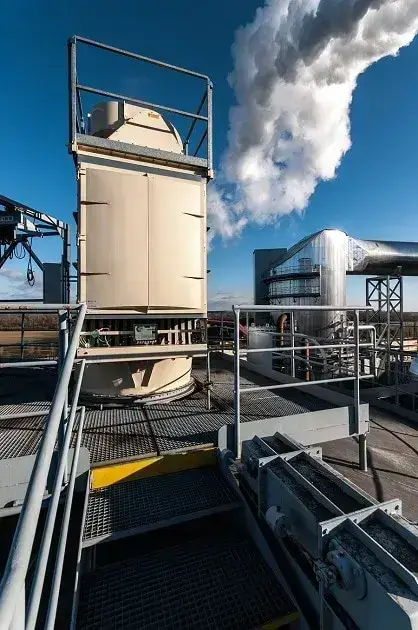
For the filtration of flue gases from biomass combustion, we select filters from the CARM GH series. The filtration system is designed as a multi-chamber unit. Switching individual filter chambers on and off allows the filter media to be regenerated without the passage of flue gases, which is the most effective method and thus keeps the pressure drop across the filter media from increasing. The filter unit casing is thermally insulated, and the hopper is equipped with a heating system. We manufacture the regeneration components from stainless steel.
We use cyclone separators as pre-separators. These pre-separators are designed to capture burning particles, which are frequently found in flue gases. Installing a pre-separator reduces the risk of the filtration system catching fire.
In applications for the dust removal from combustion sources, intelligent control of the extraction system is essential. The filtration system must maintain the specified negative pressure in the flue behind the boiler with a high degree of precision. It must be equipped with safety features to cope with power failures and compressed air supply failures. Our state-of-the-art systems record operational data, which they store so that the filter’s performance can be evaluated over time. We equip today’s systems with a GSM module to enable remote control, monitoring and parameter adjustment.
We design and supply our systems so as not to burden clients with high operating costs for the filtration system. They utilise smooth filter sleeves made from microporous filter fabric with a heat resistance of up to 190°C. The filter sleeves contain no seams, do not tear and are highly mechanically resistant. For dust removal applications in combustion sources, we specify a service life of at least 20,000 operating hours for the filter media.

© 2026 CIPRES FILTR BRNO s. r. o.
All rights reserved