FOUNDRY FURNACES
Applications
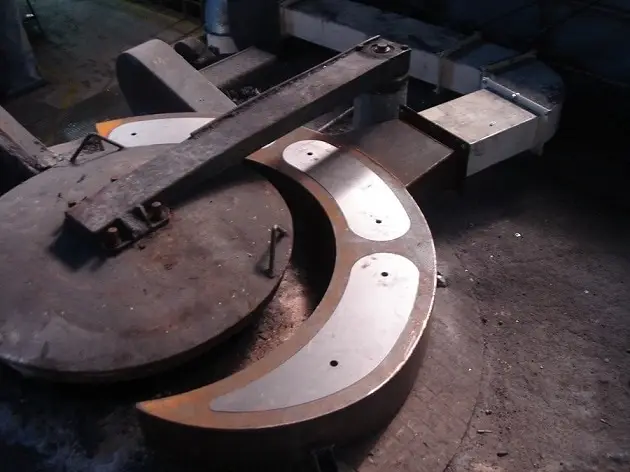
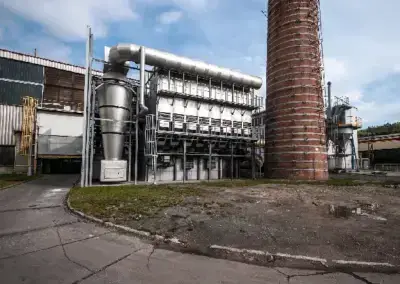
When metals are smelted in furnaces, gaseous flue gases are produced which contain carbon dioxide, water vapour, nitrogen, residual oxygen, carbon monoxide, sulphur dioxide, nitrogen oxides and many other components. Another significant component of the exhaust gases is solid waste, which contains cinder, slag and fly ash. For both these fractions – gaseous and solid – there are effective filtration methods, including suitably selected filtration equipment, which ensure that emission levels remain below the limits set by legislation. Flue gas treatment during metal smelting in furnaces is an integral part of this process.
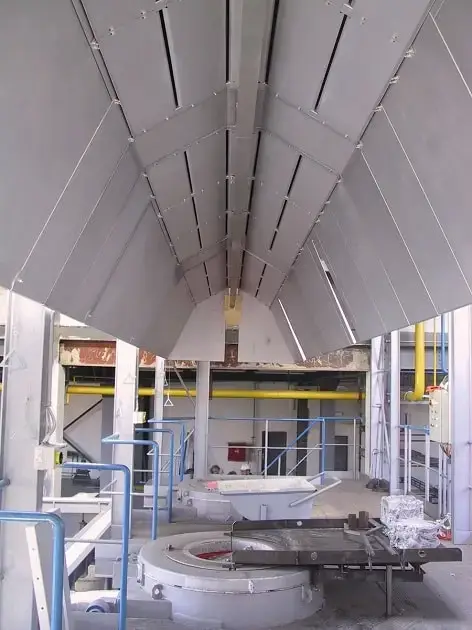
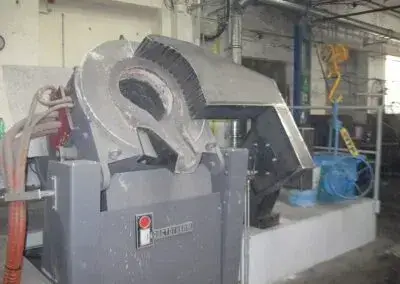
Today’s induction furnaces are fitted as standard with a hinged cover, which is used for extraction in two positions. Melting takes place whilst the cover is closed. At this stage, we maintain the extraction rate at minimum levels compared to when the cover is open. We use control dampers in the extraction ductwork to regulate the extraction rate. The fan speed is controlled via a frequency converter according to the negative pressure in the extraction ductwork. When the cover is open, the system activates extraction at maximum capacity. At this point, it is necessary to extract the escaping smoke via the raised cover, thereby limiting smoke leakage into the hall. Induction furnaces do not increase the humidity of the extracted air; therefore, we do not thermally insulate the selected filtration unit – the CARM GH.
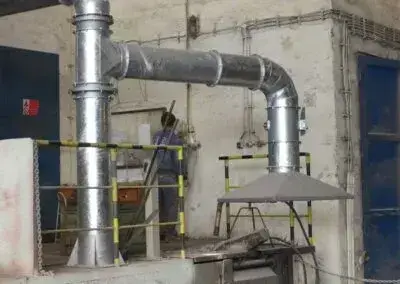
When extracting particulate matter from gas melting furnaces, we always adhere to the operating parameters specified by the furnace manufacturer. This is because the performance of the extraction system directly affects the operation of the melting furnace. The temperature of the flue gases at the furnace outlet, which reaches 300 °C to 400 °C, must be cooled to approximately 120 to 150 °C prior to filtration. We use controlled intake of ambient air into the extraction duct to regulate the temperature in the extraction duct and throughout the ventilation system or heat recovery system. For heat recovery, we incorporate a heat exchanger into the extraction system, which extracts thermal energy from the flue gases in a controlled manner. The recovered energy can be used for heating or preheating water. We maintain the flue gases from gas-fired furnaces at a temperature of at least 90 °C and fit the entire filtration system with thermal insulation to prevent the flue gases from condensing within the filtration system.
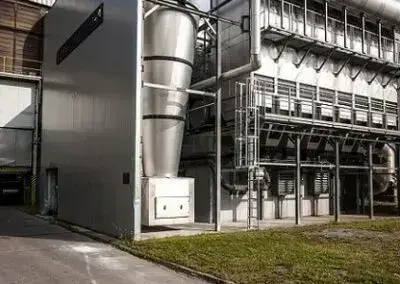
In applications involving the extraction of fumes from melting furnaces, smart control of the extraction system is essential. The filtration system must maintain the specified negative pressure at the furnace extraction outlet with high precision. It must be fitted with safety features to cope with power cuts and compressed air failures. Our state-of-the-art systems record operational data, which they store so that the performance of the CARM GH filter can be evaluated over time. We equip today’s systems with a GSM module to enable remote control, monitoring and parameter adjustment.
We design and supply our systems so as not to burden our clients with high operating costs for the filtration system. They utilise smooth filter sleeves made from microporous filter fabric. The filter sleeves contain no fillers, do not tear and are highly mechanically resistant. For furnace dedusting applications, we specify a service life of at least 20,000 operating hours for the filter media.

© 2026 CIPRES FILTR BRNO s. r. o.
All rights reserved