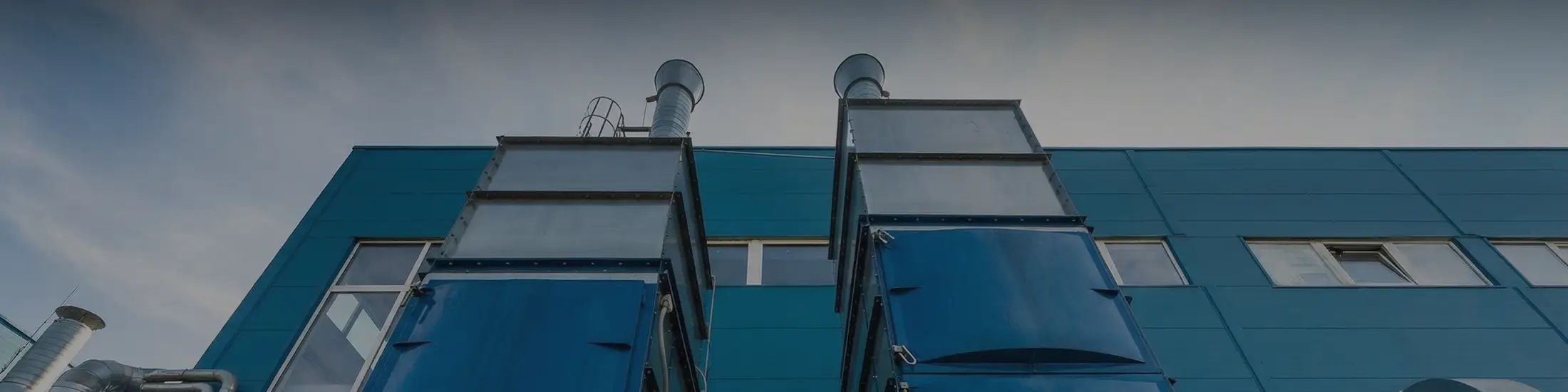
PRODUCTION OF BUILDING MATERIALS
Applications
The term ‘ceramic and stone dust’ refers to dust generated on production lines during the processing of stone in quarries and the manufacture of products in building materials factories, such as tiles, bricks, roofing materials and similar applications. Ceramic dust is highly abrasive, very fine, dry and non-sticky.
Centralised extraction systems are frequently used both on complete production lines and on single-purpose machines. An example of dust particle extraction from a single-purpose machine is the extraction from a precision brick grinder. During the grinding process itself, high extraction capacity is required to ensure that dust is drawn from the grinder into the filter. Both very fine dust particles and brick fragments enter the extraction ductwork.
The purpose of dust extraction in the production of building materials is to reduce dust levels in the working environment and to prevent dust from escaping into the surrounding environment in the form of fugitive emissions. We therefore recommend the CARM GH filtration system.
The fundamental approach to the design and implementation of a centralised extraction system is the thorough mapping of individual dust sources. For each individual dust source, we determine the required extraction capacity and design the optimal configuration of the extraction unit. A centralised extraction system is characterised by the use of a single filtration unit, which is connected via a central extraction duct to the extraction units at the individual dust sources. Ceramic dust is highly abrasive; for this reason, we install extraction pipework of Group III specification, i.e. thick-walled, welded pipework. The CARM GH filter unit is equipped with automatic regeneration of the filter media using counter-flow compressed air, which ensures continuous extraction performance. The dust separated by the filter unit is conveyed via a rotary feeder into a big bag or container. The filtered air can be recirculated back into the production hall, thereby saving on heating costs during the winter months.
We design and supply our systems in such a way as to avoid burdening clients with high operating costs for the filtration system. They utilise smooth filter bags made from microporous filter fabric. The filter sleeves contain no pleats, do not tear and are highly mechanically resistant. For applications in welding shops, we specify a service life of at least 20,000 operating hours for the filter media.

© 2026 CIPRES FILTR BRNO s. r. o.
All rights reserved