RUBBISH COLLECTION
Products
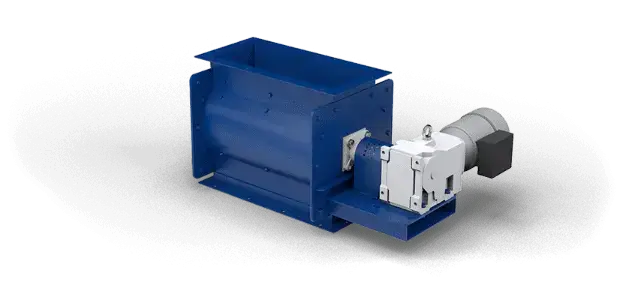
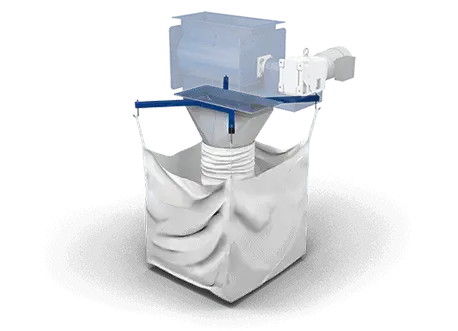
Rotary feeders are primarily designed to empty the hoppers of filtration equipment during the extraction process. The rotary feeder transports material from the top downwards by rotating the feeder’s rotor. The rotor is fitted with flexible blade tips, ensuring the required seal of the mechanism whilst the filtration plant is in operation. The rotor is mounted on a shaft via bearings, which are situated outside the area of the conveyed material. The rotor’s rotational speed is provided by a motor with a gearbox, mounted on the base of the rotary feeder. Rotary feeders are primarily used for conveying dust into big bags or larger containers.
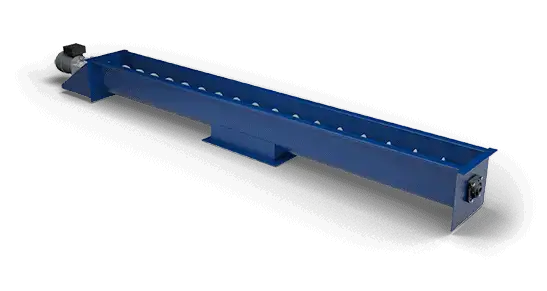
We use a screw conveyor to transport separated filtrate horizontally. It is usually part of the discharge hopper of larger filtration units, where the screw conveyor centralises the point of discharge for the separated dust. The outlet of the screw conveyor is always fitted with a rotary feeder, which ensures that the internal space of the filter is pressurised and sealed off from the external environment. We manufacture screw conveyors in lengths ranging from one to six metres without a centre bearing.
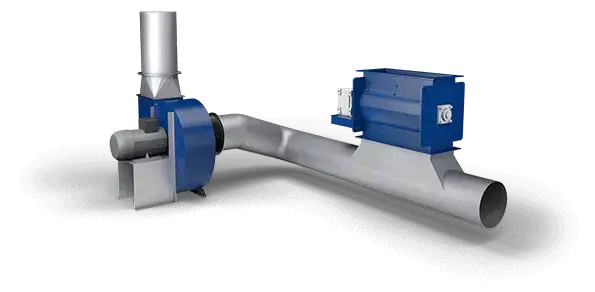
We use pneumatic dust transport in applications where it is necessary to convey separated dust to a more remote storage location. Pneumatic dust transport typically consists of a transport fan and a cyclone separator operating in a closed circuit. This system is often used to transport separated sawdust from a filtration unit located at ground level to an adjacent storage silo. It is also used in welding shops and other applications where the location of the filtration unit complicates waste handling. By using pneumatic dust transport, the waste collection point can be situated in a location accessible to the user.
Big bags are ideally suited for use in filtration systems handling large quantities of separated dust. The advantages of using big bags include their large capacity of 1,000 litres and easy handling using a forklift truck. The big bag is fitted with an inlet spout that can be sealed using the attached drawstrings. When the spout is sealed, handling the dust is dust-free and allows the filled bags to be stored outdoors.
Bottom-discharge containers are frequently used in filtration units. We manufacture these containers in capacities ranging from 150 to 300 litres. One advantage is the ability to handle the container using a forklift or overhead crane. Waste is discharged from the bottom of the container via a tilting base. The containers form part of the filtration unit, which they seal under pressure. The filtration unit cannot be operated without a container in place.
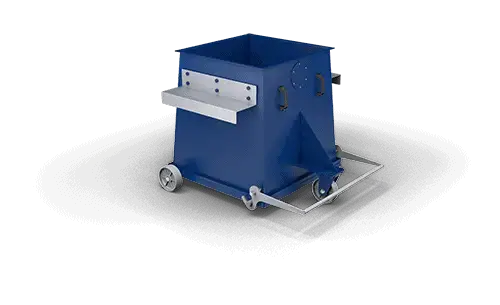
For the smallest filtration units, we use collection tanks with a capacity of 30 or 55 litres. These tanks can be fitted with a PVC bag to facilitate the handling of separated waste. The collection tanks form part of the filtration unit, which they seal under pressure. The filtration unit cannot be operated without a collection tank in place.


© 2026 CIPRES FILTR BRNO s. r. o.
All rights reserved