PAPER-PROCESSING PLANTS
Applications
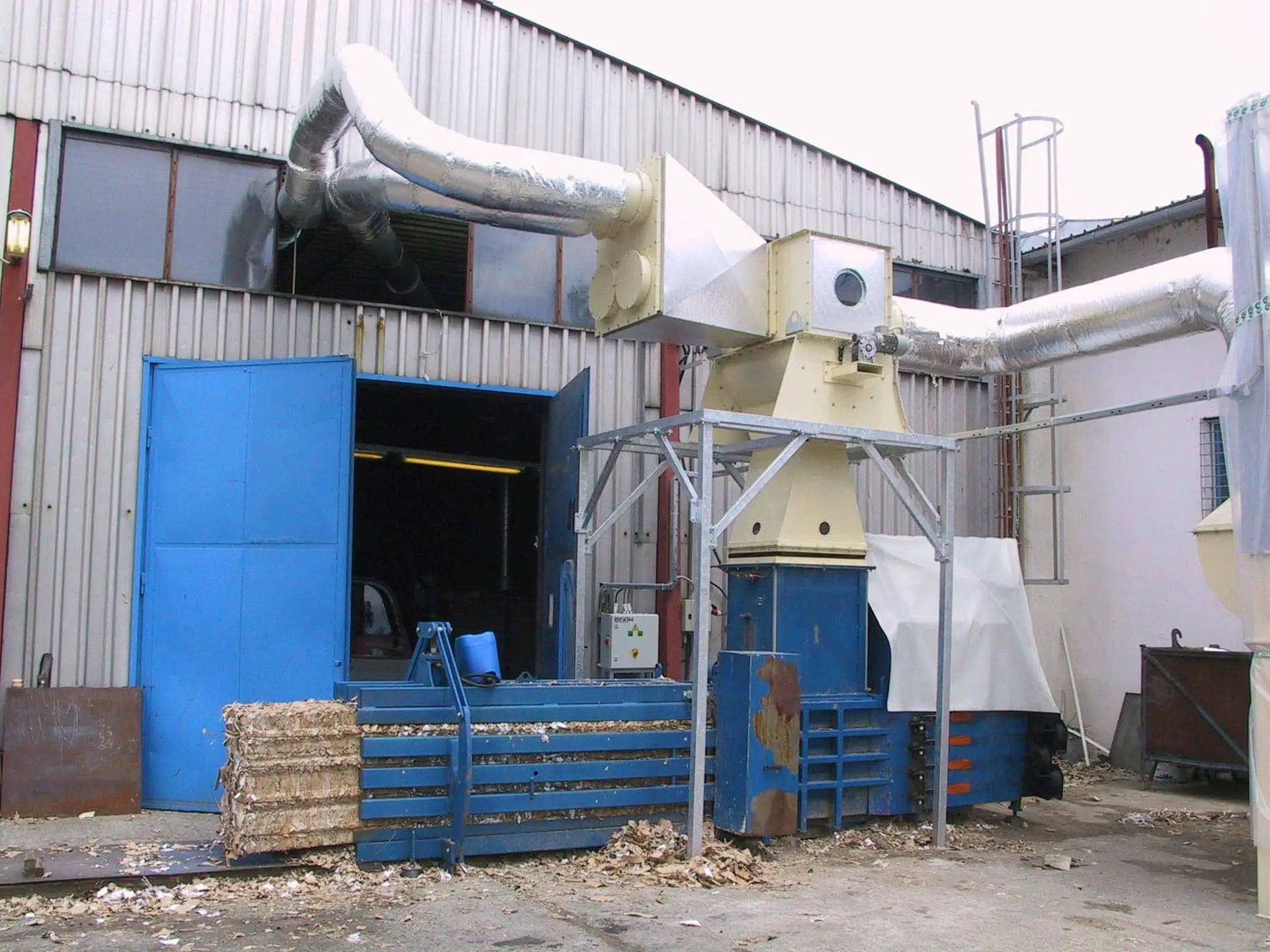
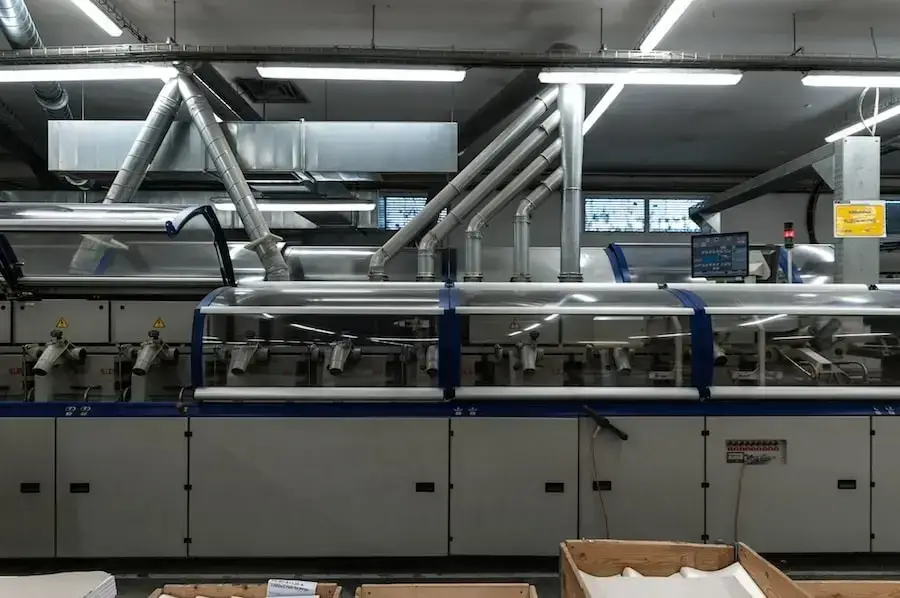
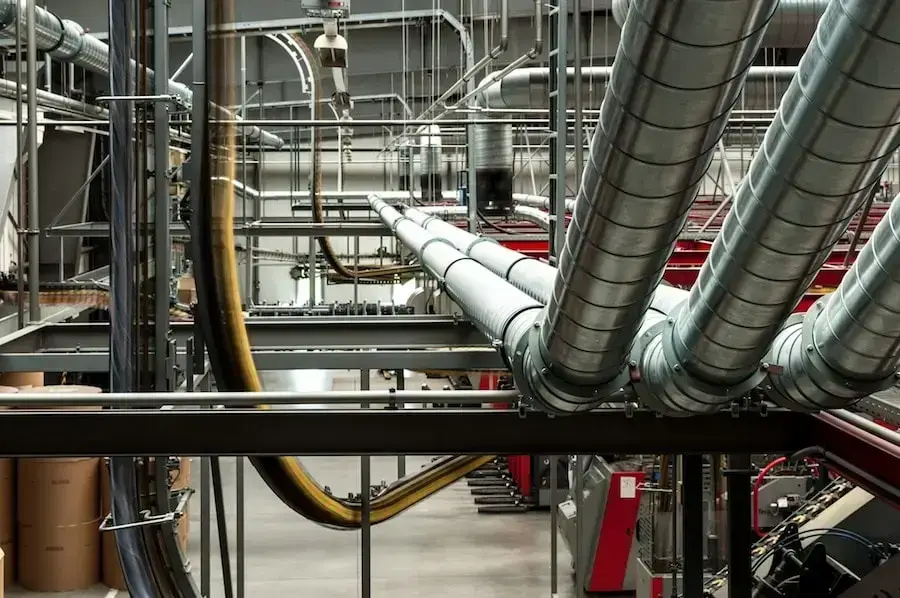
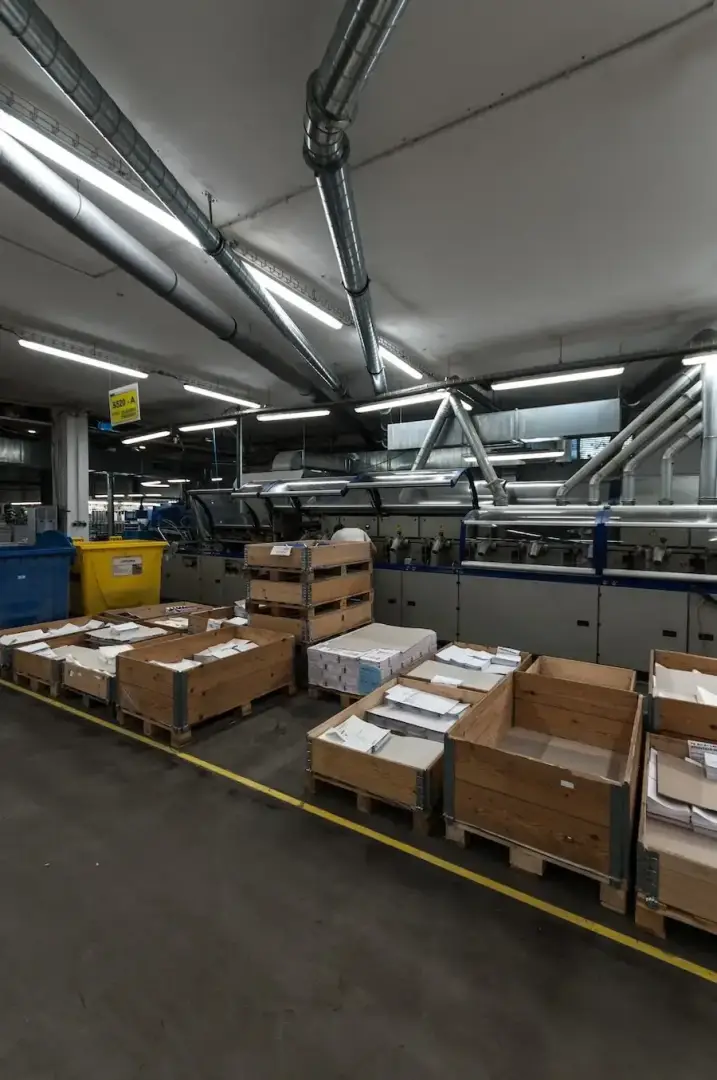
We install extraction systems for paper waste and dust in printing facilities alongside production lines and machinery used to manufacture books, magazines, publications and packaging. The extraction system removes waste paper generated during the formatting of products, such as offcuts, trimmings, die-cuts, confetti, paper strips or continuous webs. High-quality extraction is essential due to the large volume of waste material, and in some cases, the operation of the production machine or line depends on sufficient negative pressure at the connection point. Without extraction, the production machine would otherwise be unable to operate.
Depending on the nature of the dust, dust deposits in the vicinity of production lines can, when stirred up, form an explosive atmosphere when mixed with air; this must be avoided.
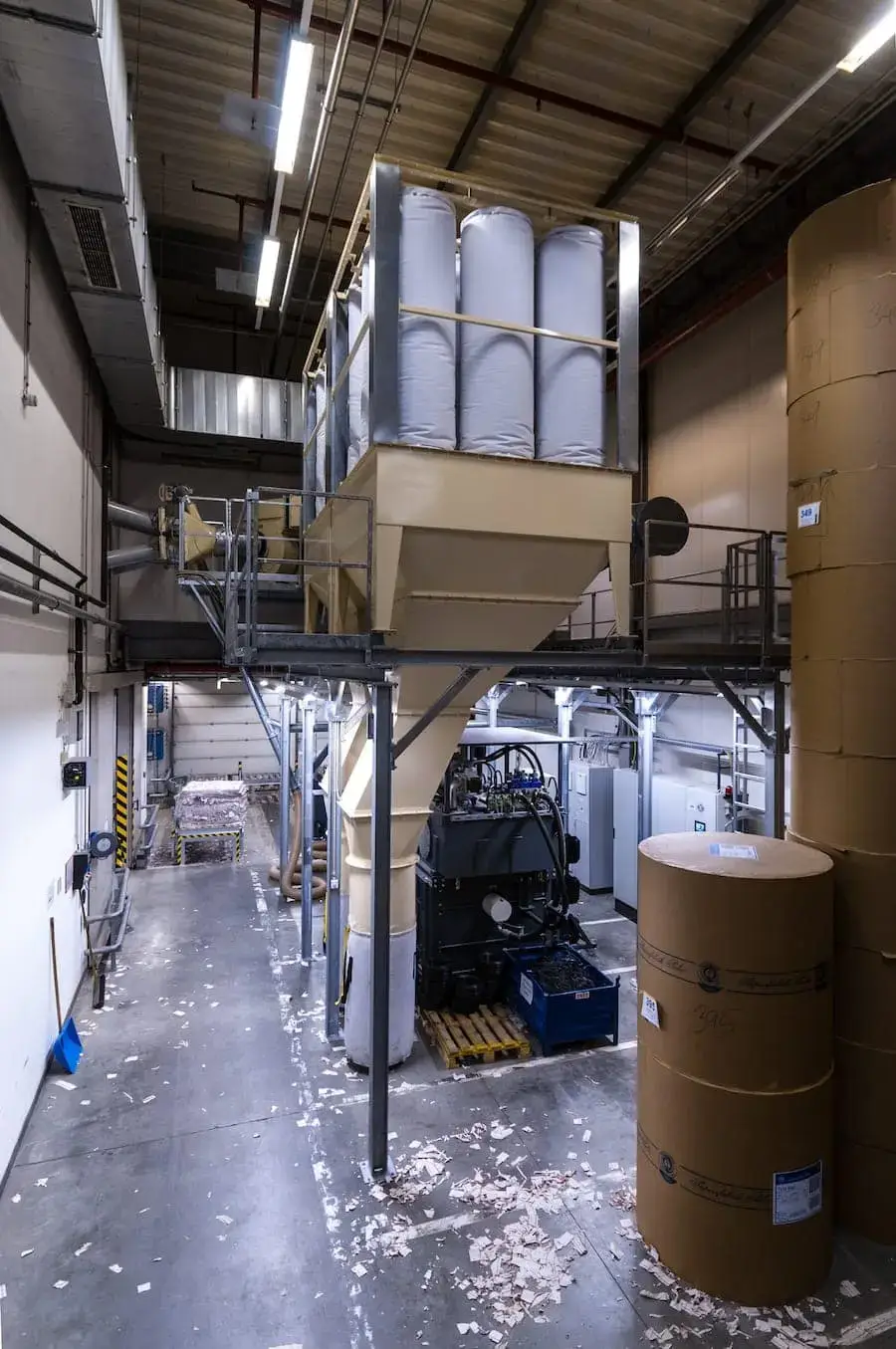
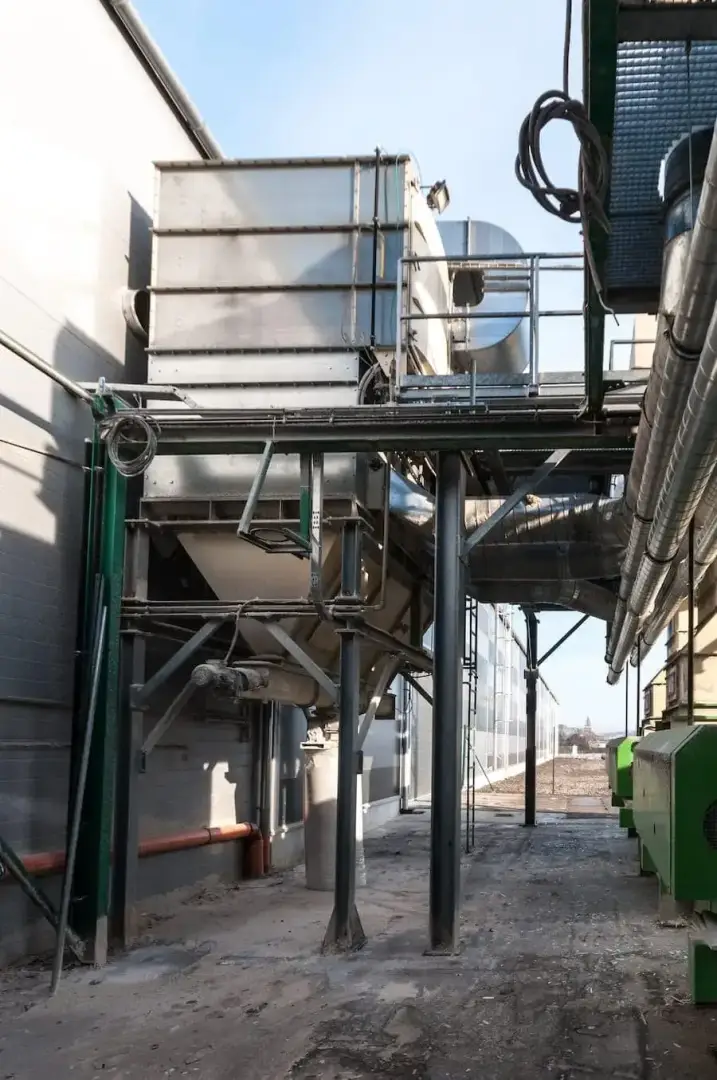
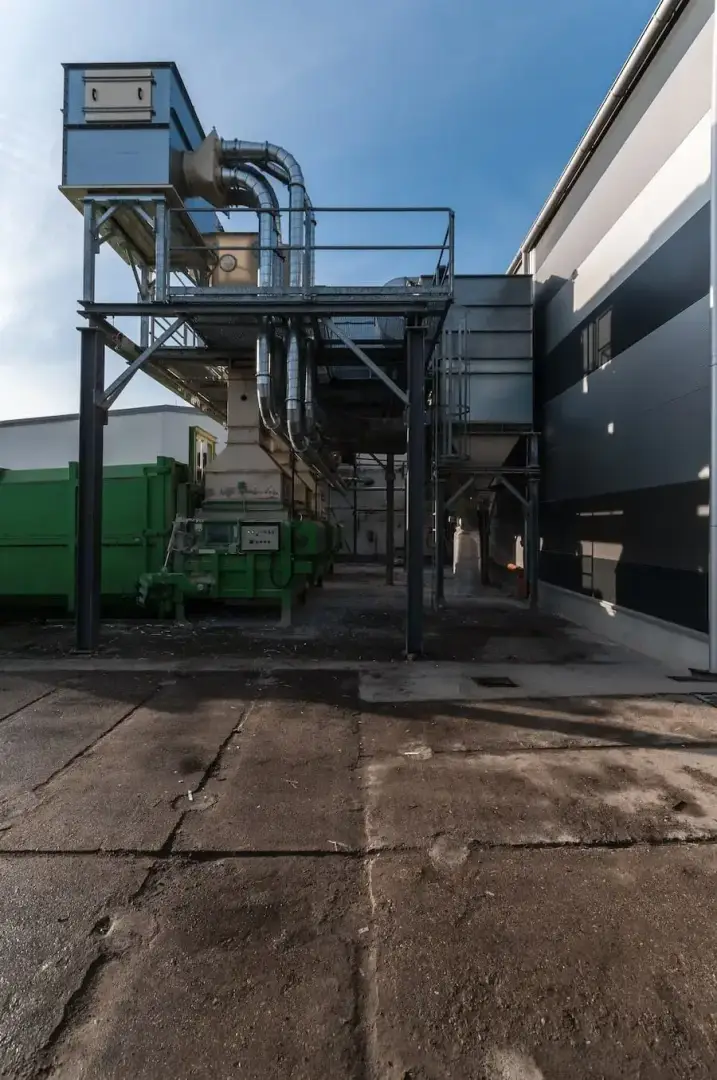
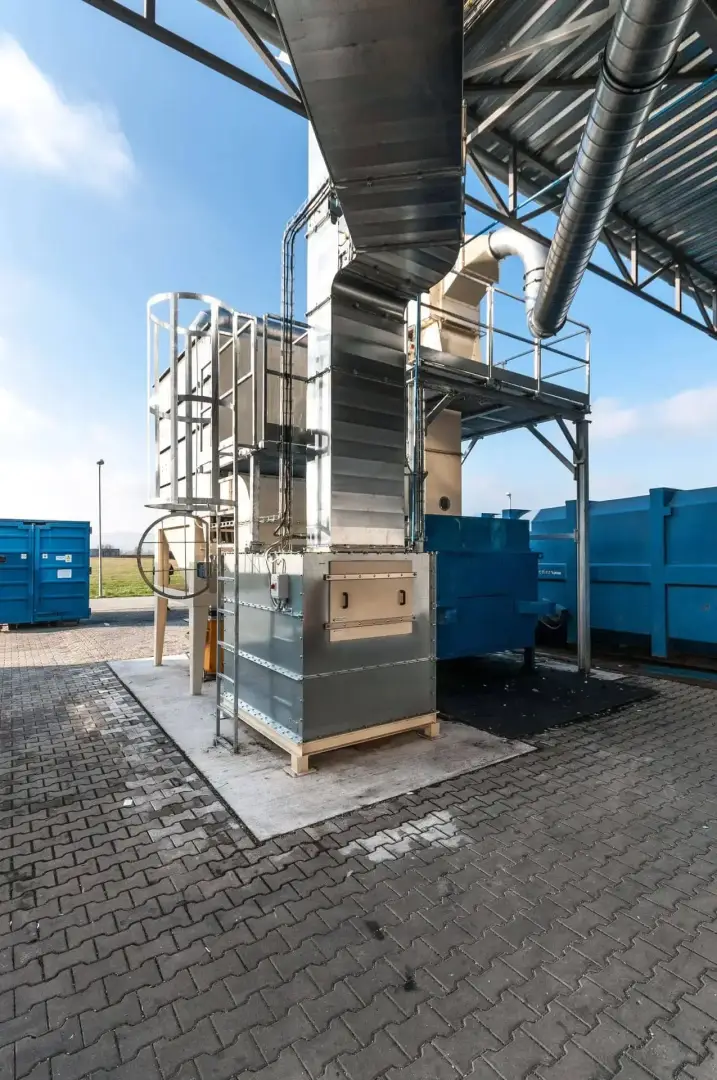
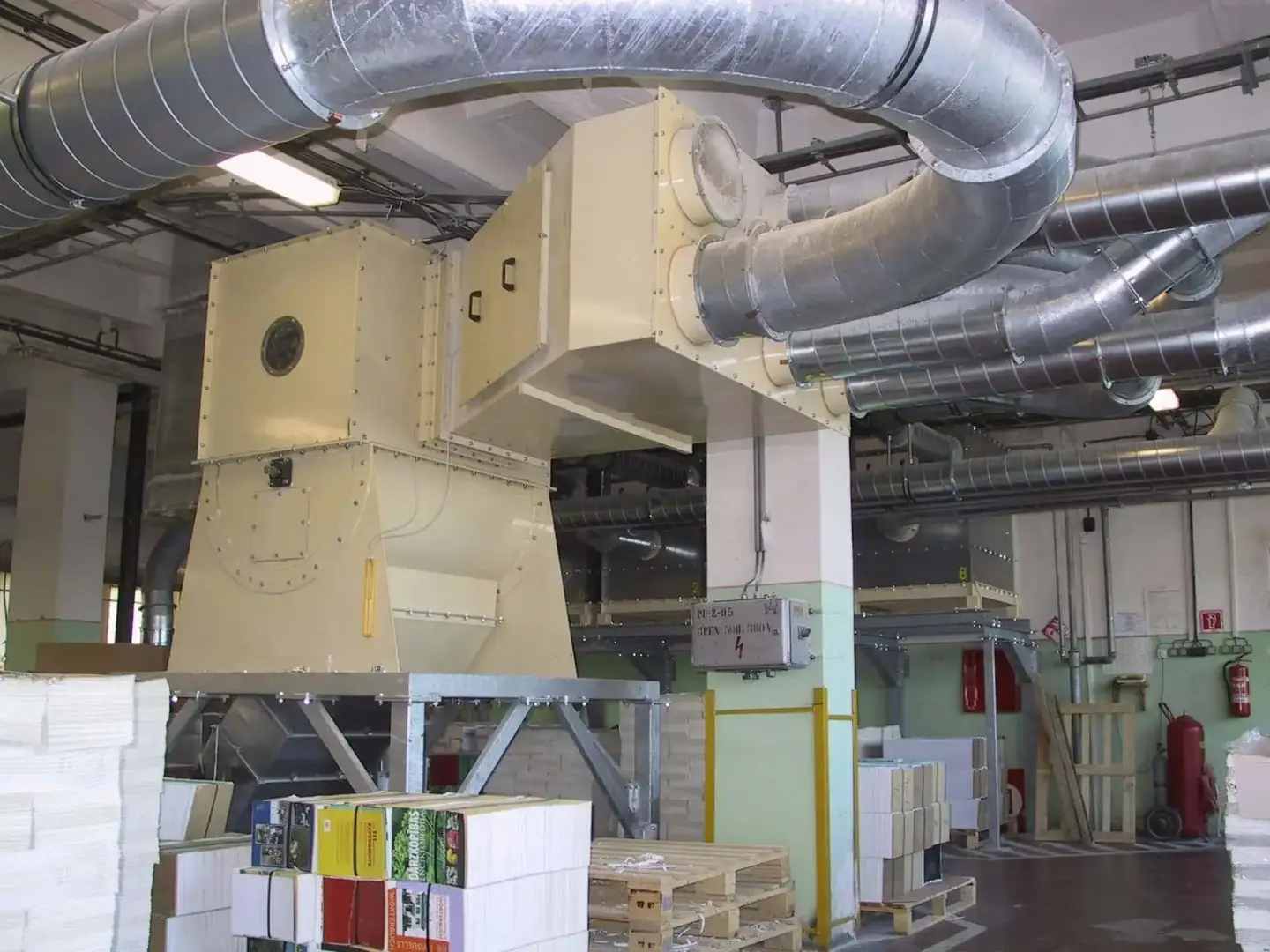
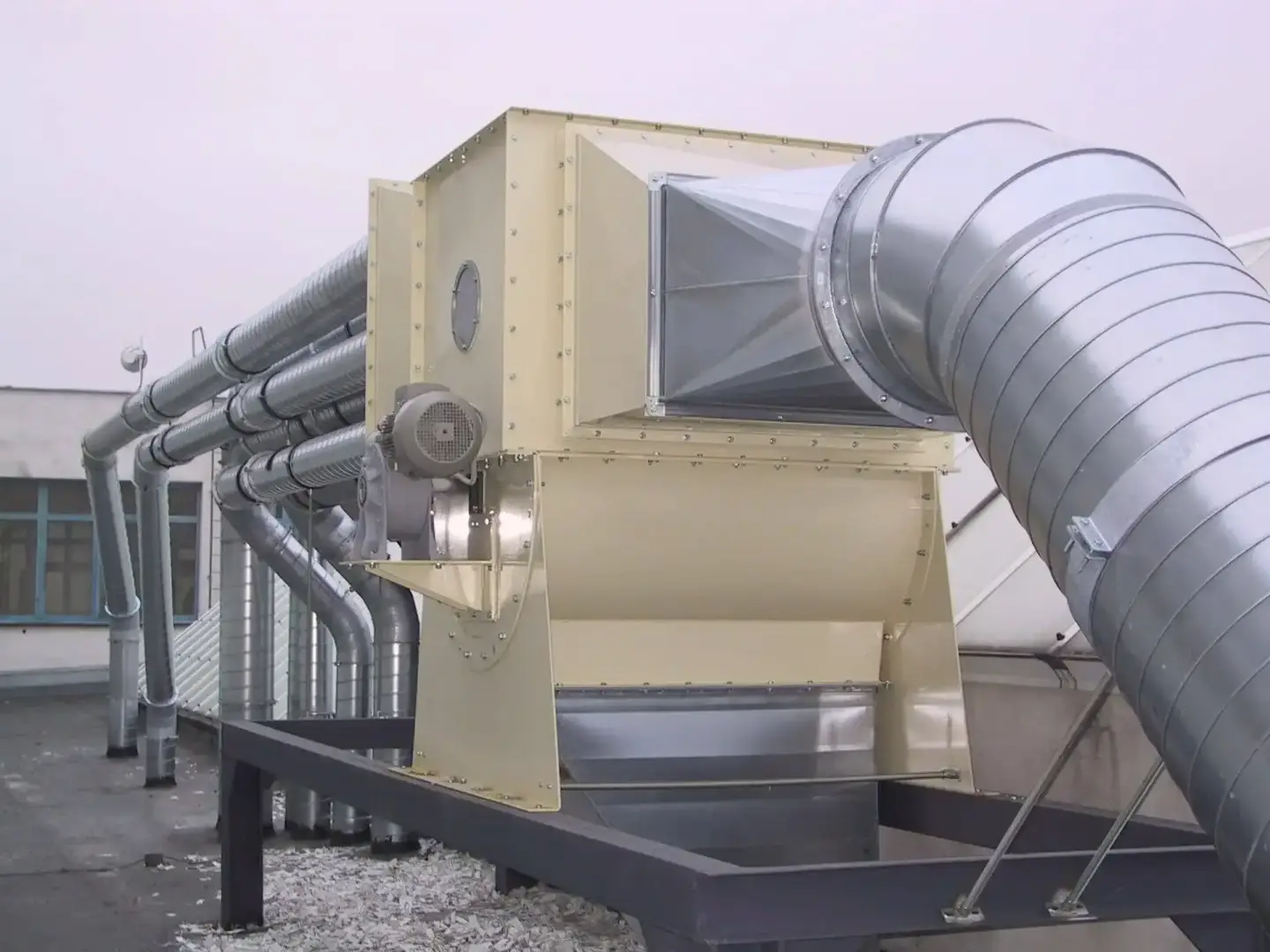
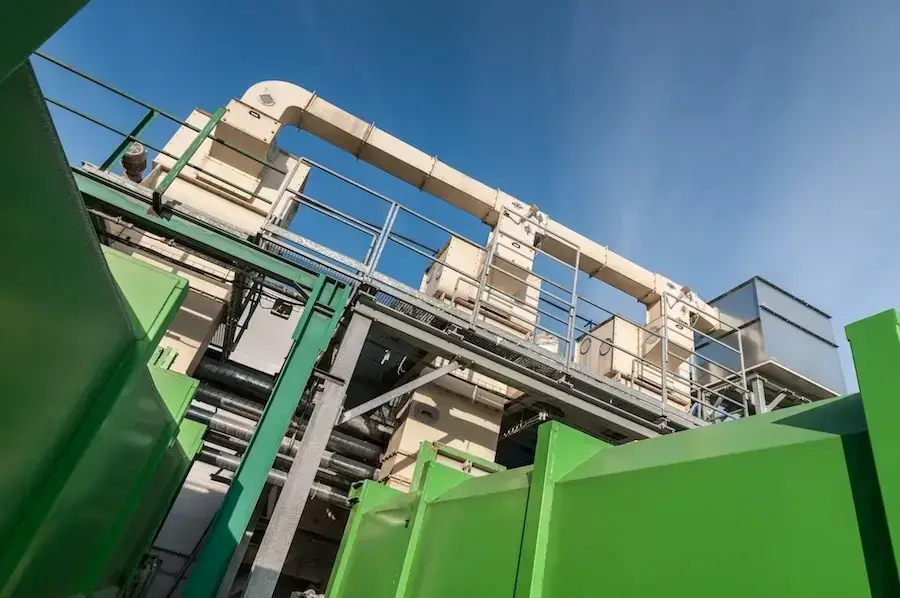
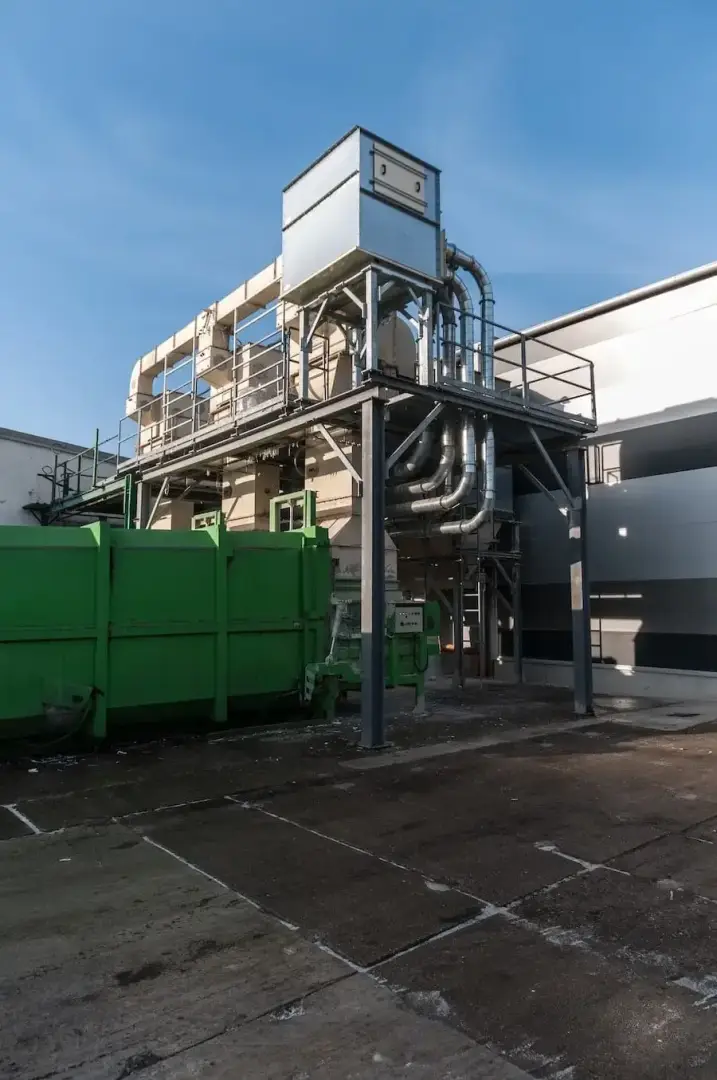
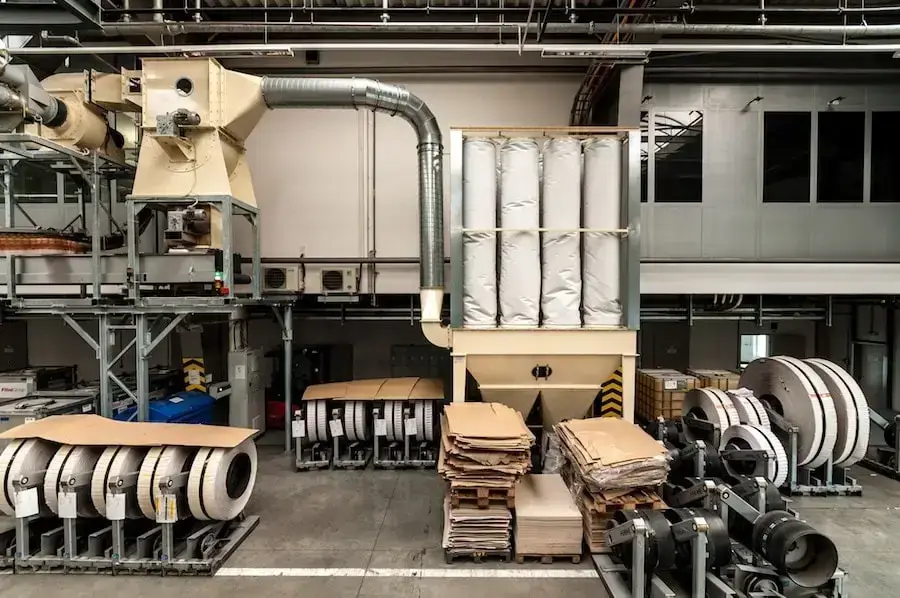
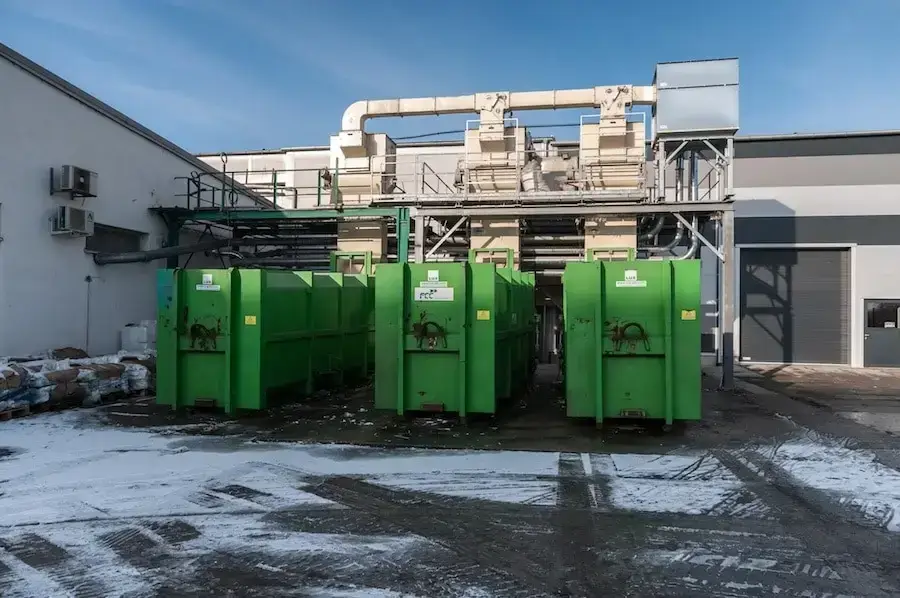
In most cases, the extraction of solid particles in printing works is organised as a centralised extraction system, with air from multiple machines channelled into a single filtration system. Depending on the extraction capacity required for individual machines, groups of machines are then formed, which are connected via a central extraction duct to an upstream rotary separator and a CARM GH-ZLD or CUMA D-ST filtration unit. Individual woodworking machines have different requirements regarding the volume of extracted air, the extraction velocity at the connection point and the required negative pressure. The dimensions of the duct branches, the filtration unit and the fans are always tailored to the specific printing plant.
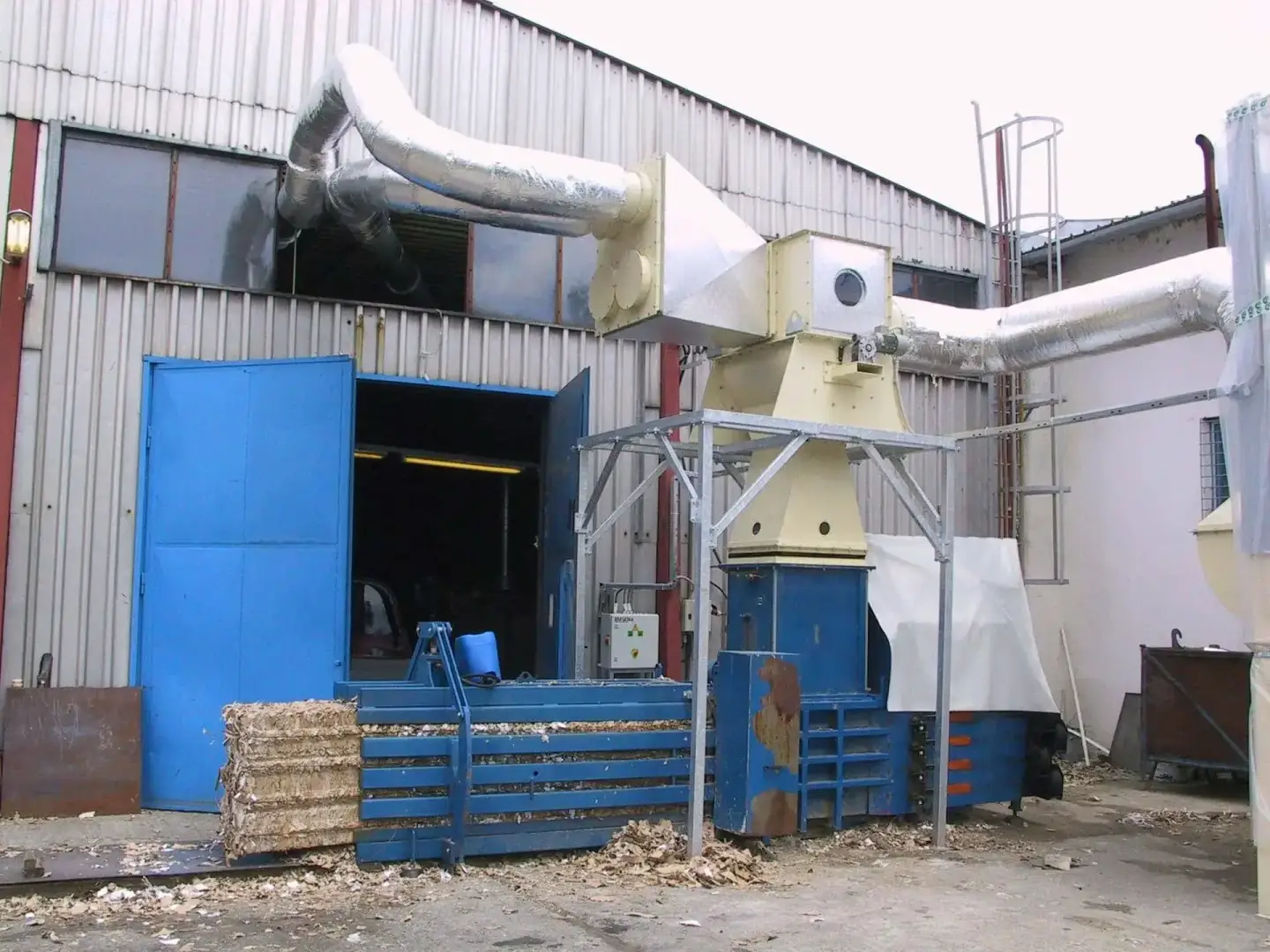
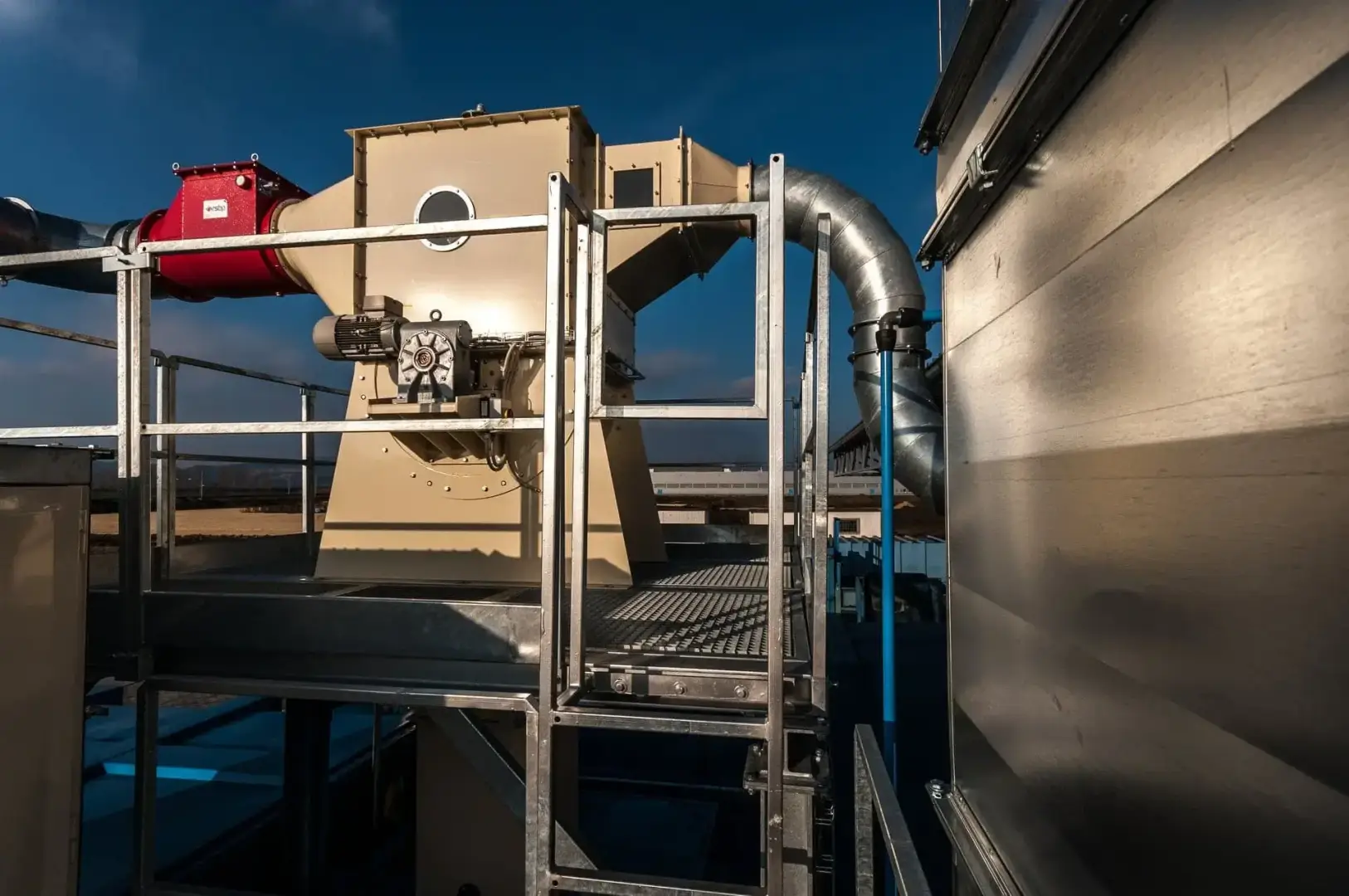
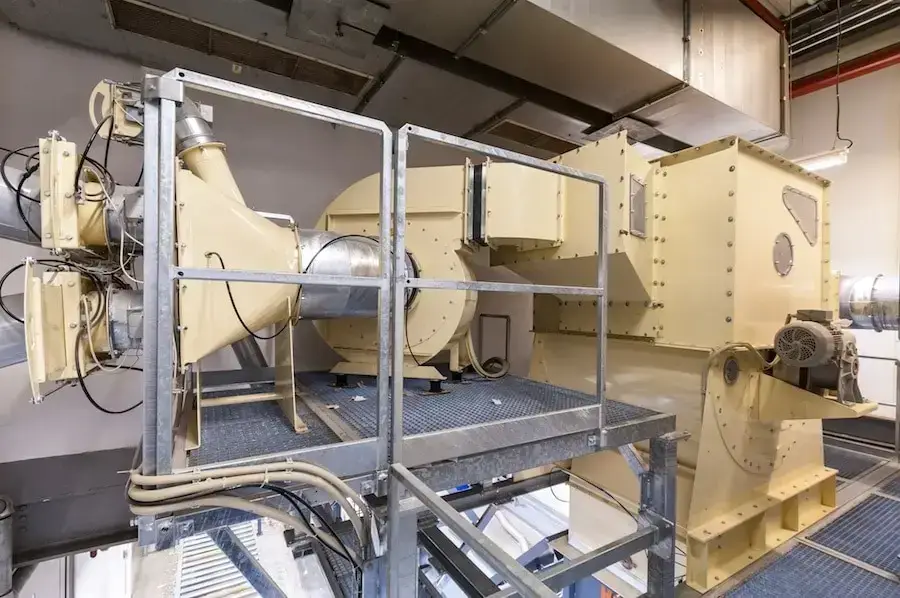
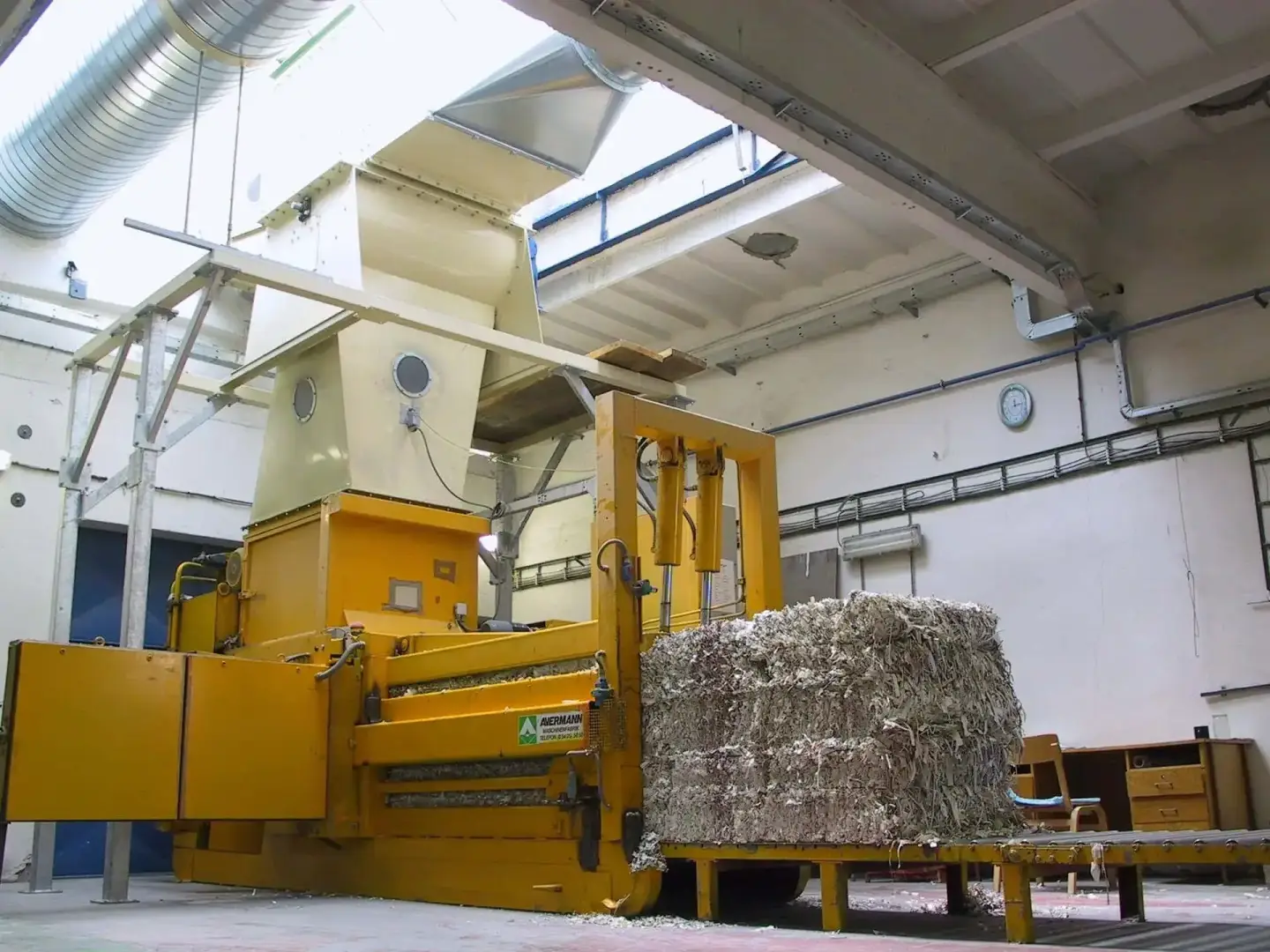
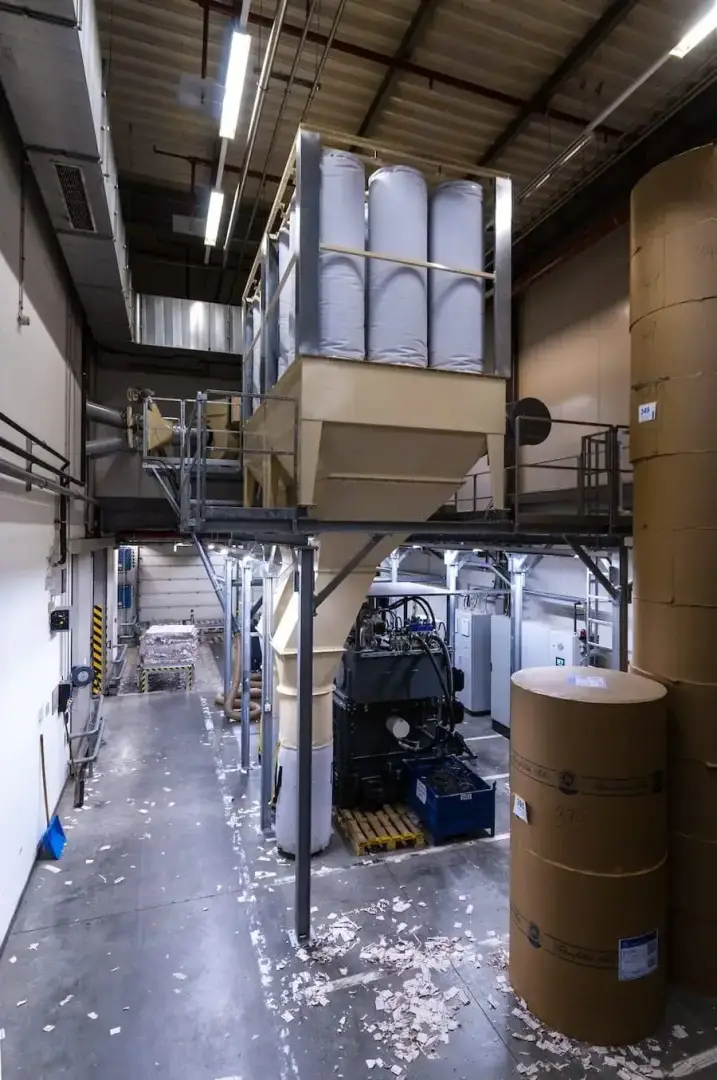
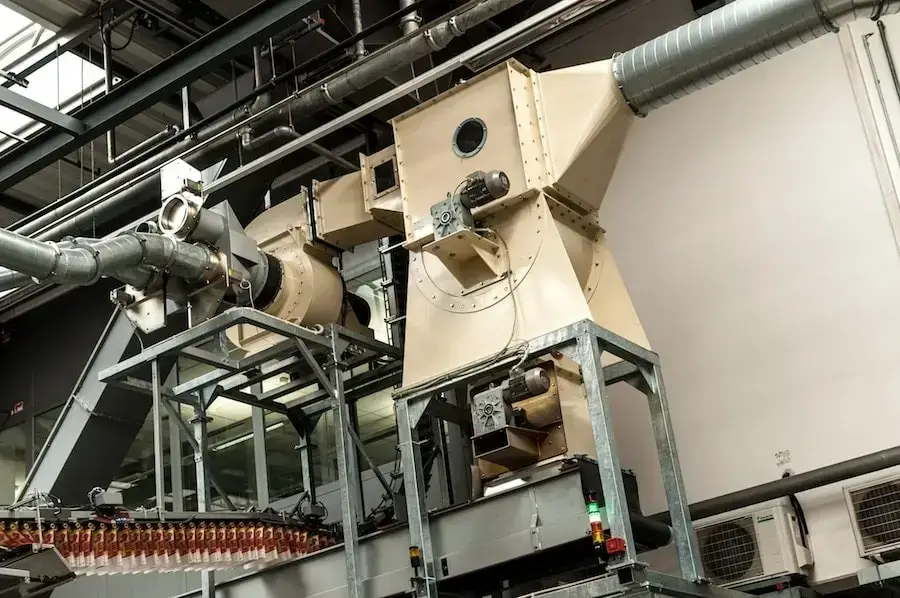
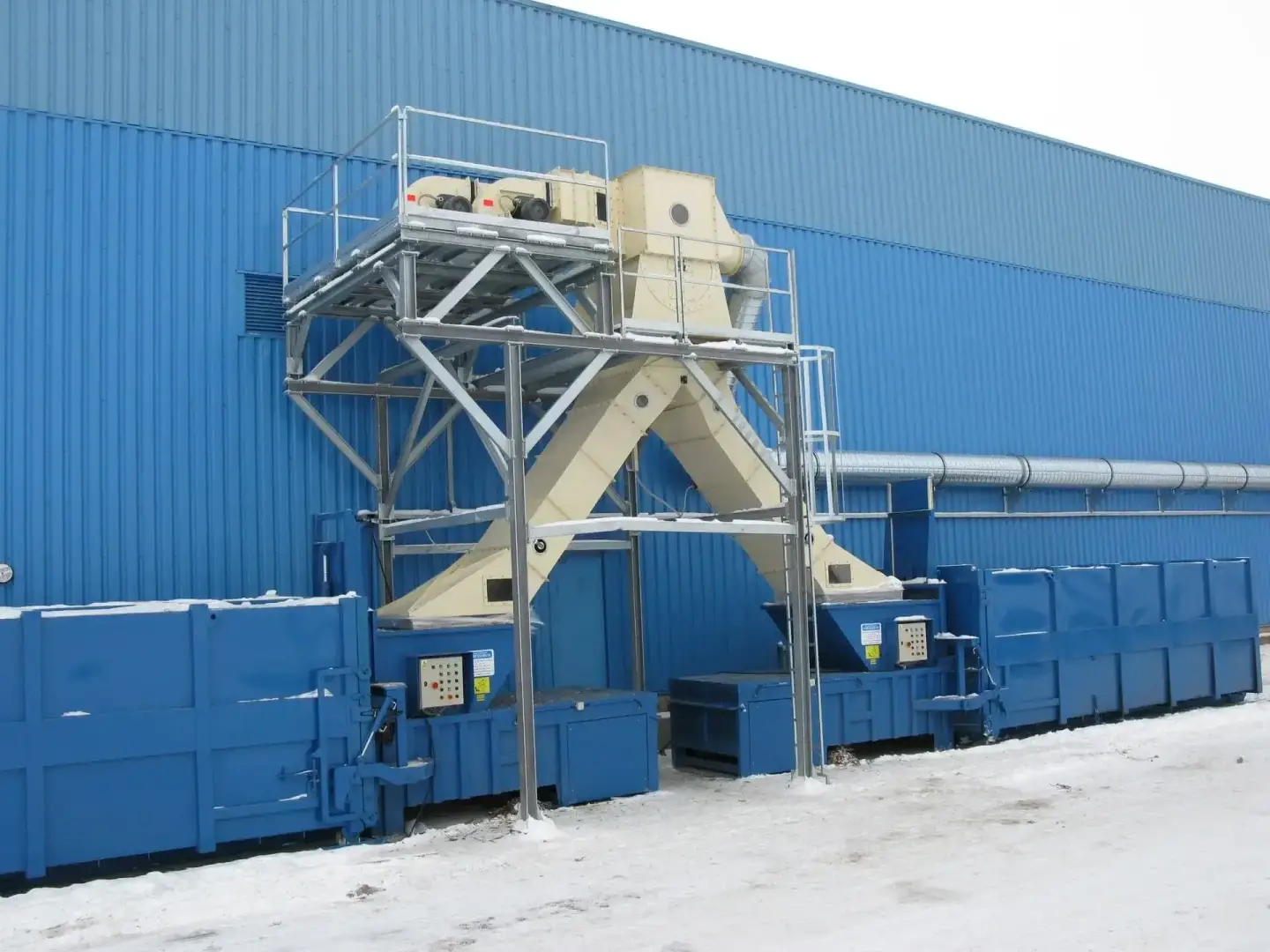
Given the varied composition of the extracted paper waste, we install a rotary separator upstream of the filtration unit. The purpose of the rotary separator is to separate paper strips, cuttings and confetti from paper dust, due to the different methods used to process the waste. Paper strips and cuttings are processed using compacting or baling presses, which are situated beneath the outlet of the rotary separator. Paper dust is processed using a briquetting press situated beneath the filtration unit.
We design the filtration unit with regeneration of the filter media using counter-current compressed air to ensure continuous extraction capacity. The filtered air can be fully recirculated back into the production hall, resulting in significant savings on heating costs during the winter months.
Paper dust is explosive, and we must treat it as such when designing extraction technology. The technology must meet at least the following basic requirements: the extraction velocity in the ductwork must be at least 20 m/s. The individual components of the ventilation system must be electrically conductively interconnected to dissipate the static electricity generated by the movement of dust particles through the ductwork. The filtration technology must be fitted with explosion protection elements against pressure waves. The filter must be fitted with a relief membrane directing pressure to a safe area with restricted access. The extraction duct must be fitted with a safety non-return valve to prevent the propagation of a pressure wave into the extraction duct. Filtration units, whether CARM GH-ZLD or CUMA D-ST, must be pressure-resistant and fitted with antistatic filter media. Regular annual inspections of the filtration unit’s safety components must be carried out to ensure the safety of the system.
We design and supply our systems in such a way as to avoid burdening our clients with high operating costs for the filtration system. They utilise smooth filter sleeves made from microporous filter fabric. The filter sleeves contain no seams, do not tear and are highly mechanically resistant. For applications in welding shops, we specify a service life of at least 20,000 operating hours for the filter media.

© 2026 CIPRES FILTR BRNO s. r. o.
All rights reserved