CYCLONE SEPARATORS
Products
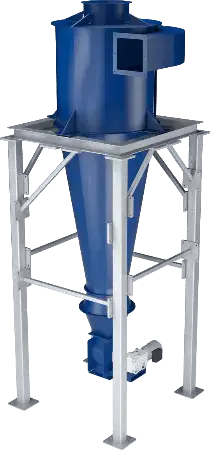
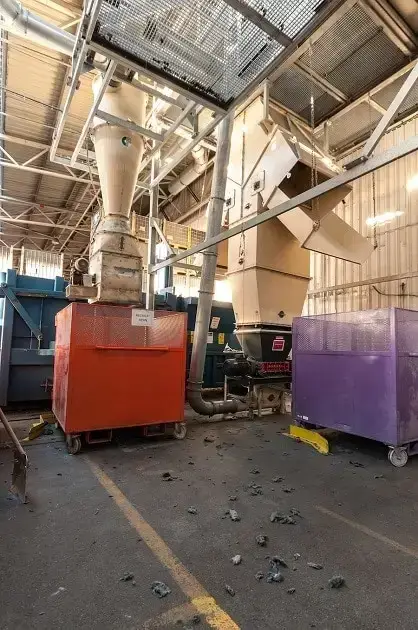
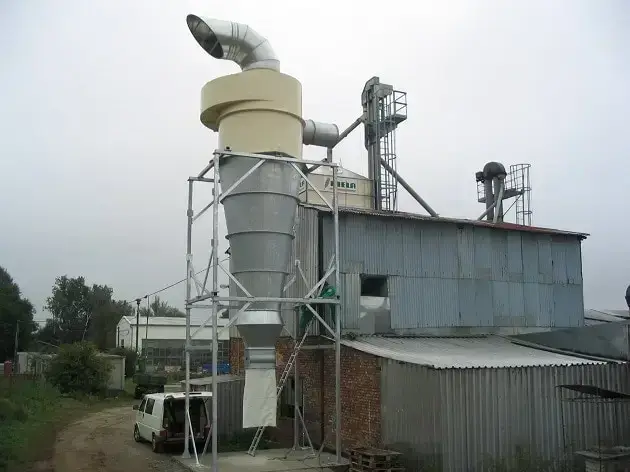
Cyclone dust separators are mechanical devices for separating dust particles, which utilise centrifugal forces acting on the dust particles carried in the extracted air stream. The air-dust mixture enters the cyclone separator at the top – into an eccentric inlet, which sets the mixture rotating around the cyclone’s axis. Under the influence of centrifugal force, the dust particles slide down the inner surface of the cyclone separator’s tube and, under the influence of gravity, are carried downwards towards the discharge flange. The air exits at the top of the cyclone separator. For the cyclone to function correctly, it is essential to ensure that the discharge outlet is pressurised relative to the surrounding environment, so as to prevent any disruption to the flow inside the cyclone or air leakage through the discharge outlet.
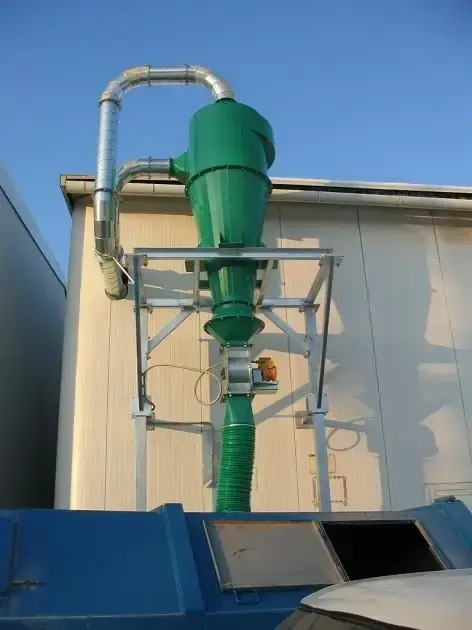
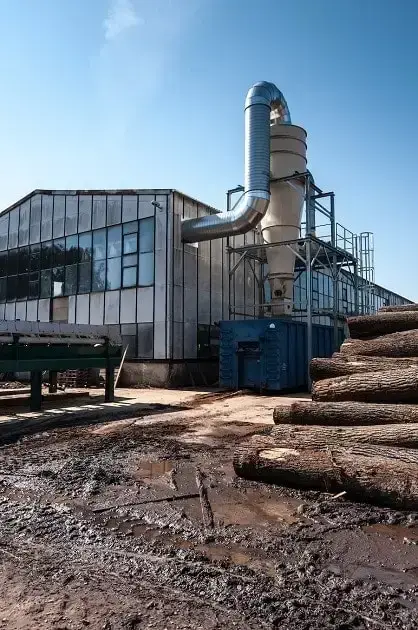
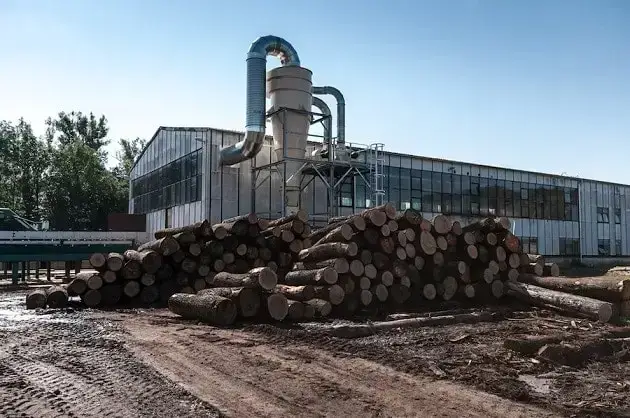
Cyclone separators are successfully used to separate heavier impurities from extracted air, which are removed with high efficiency. The most common application is the extraction of sawdust and wood waste via a cyclone in sawmills, where the extracted fraction consists of wet and heavy sawdust, which is subsequently filtered out by a sawdust cyclone separator. Cyclones are also used as pre-separators upstream of filtration equipment. Placing them upstream of the filter reduces the load on the filtration unit and ensures more stable operating conditions for the entire ventilation system. Dust separators also have specific uses in dust extraction applications for solid-fuel boilers, where they act as pre-separators for sparks, thereby reducing the risk of the downstream filtration equipment catching fire, or in wood-processing plants.
Cyclone separators are manufactured in capacity ranges from CF0 (600 m³/h) to CF14 (30,000 m³/h). Where a higher volume of extracted air is required, cyclone separators are arranged in parallel to form a multi-cyclone separator system. A cyclone separator of any capacity contributes to an increase in the system’s total pressure drop of approximately 1,200 to 1,500 Pa within the ventilation system.
In applications where a cyclone separator for sawdust is installed, the extraction capacity can be regulated; however, one must take into account the resulting reduction in the separator’s separation efficiency. Reduced extraction capacity results in a slowdown of the airflow rotation inside the separator, thereby reducing its efficiency. A cyclone separator operates most effectively under a constant load.
For the separators we manufacture, we offer the option of stainless steel construction, the option of heating the casing, and the option of thermal insulation for the cyclone separator casing. The separators are assembled from individual components, joined by flanges, so that individual parts can be easily replaced once they have worn out due to abrasion. They can also be used as pre-separators.
The standard configuration of a cyclone separator also includes an expansion chamber at the material discharge point, which serves to stabilise the rotating material before it enters the downstream rotary feeder, which hermetically seals the entire assembly.
Sealing the discharge outlet of the separator has a crucial impact on the correct functioning of the cyclone. The rotary feeder prevents air from being blown out or drawn in through the material discharge, thereby contributing to the balance of the entire ventilation system.
Cyclone separators are used primarily in wood-processing plants and for the extraction of fumes from solid-fuel boilers.

© 2026 CIPRES FILTR BRNO s. r. o.
All rights reserved